Article content
Inflammation of the sciatic nerve is indeed a serious health problem affecting the lower back, caused by a pinched or compressed nerve.
It is a fairly common condition that causes downright unbearable pain and mobility problems.
Symptoms and causes of sciatic nerve inflammation
In the most severe cases, sciatic nerve inflammation causes numbness in the upper thighs, loss of control over urination or bowel movements.
In addition, there is also a gradual increase in weakness in the lower limbs.
The sciatic nerve is the longest nerve in the human body; it begins in the lumbar spine, passes through the buttock and down into the legs.
For this reason the pain radiates through the body and often affects one side.
There can be several reasons for the pain and even experts cannot always precisely determine and identify the source from which the pain originates.
The most common cause of sciatic nerve inflammation is a nerve compressed or pinched by a herniated disc in the spine. However, the nerve can also be pressed by bone or a tumor.
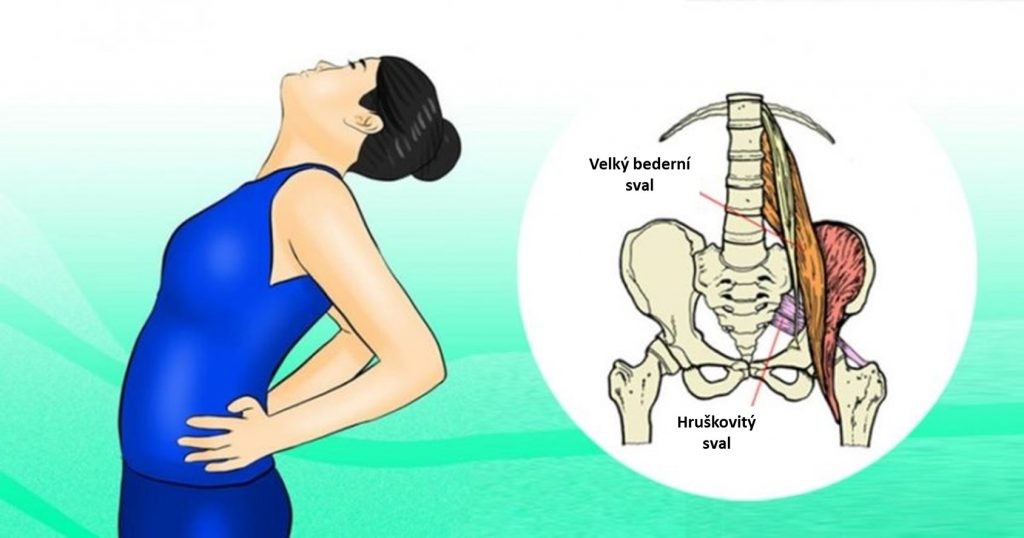
Another cause may be a compressed, stiff or poorly aligned muscle, also called the piriformis muscle.
Piriformis muscle and the sciatic nerve
The reason doctors often do not identify the piriformis muscle as the cause of sciatic nerve inflammation is that this muscle is relatively hidden and runs alongside bones and other muscles in the lumbar and abdominal area. There it overlaps the sciatic nerve in one part.
When this muscle presses on the sciatic nerve or other muscles, it leads to the so-called piriformis syndrome, which manifests as various types of pain in the lower back and legs.
If the cause of sciatic nerve inflammation is not a displaced disc but this muscle, treatment may be possible without physical therapy, surgery or medication.
Like any other muscle in the body, the piriformis moves, so appropriate stretching exercises should be able to help release tension, reduce irritation or inflammation and thus eliminate the pain.
The following two stretching exercises will serve this purpose.
Exercise No.1
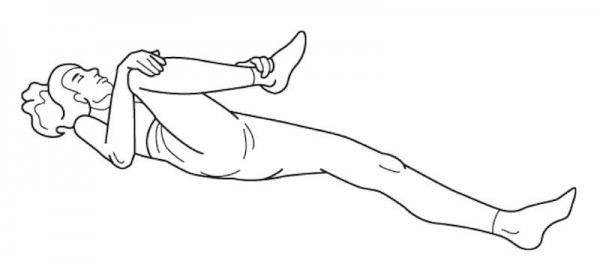
Hold the knee and the ankle with your hands and pull the leg toward you so that the knee is pushed toward the other leg.
When you feel a stretch, hold the position for 30 seconds and then return to the starting position. Repeat the exercise 3 times.
Exercise No.2

Lie on your back and bend the knee of the leg on the side that hurts and cross it over the other leg.
Then grab the other leg under the knee with your hands and pull both legs toward your chest so that the knee you are pulling is directed toward the shoulder on the same side of the body.
Again, when you feel a stretch, hold the position for 30 seconds and then return to the starting position. Repeat the exercise 3 times.
If one side of your body is not predominantly painful, perform the exercise on both sides.
Other methods to relieve sciatic nerve inflammation
Besides the mentioned exercises, there are a few general recommendations that can help reduce the pain caused by sciatic nerve inflammation.
1. Cold and hot compresses reduce pain and suppress inflammation. Apply them alternately to the painful areas. This way you will improve blood circulation and relax the muscles.
2. Topical application of St. John’s wort decoction reduces pain. You can also use St. John’s wort oil to massage the affected areas.
3. Acupressure massage of trigger points performed by professional therapists, who use it to relieve muscle stiffness. Although the technique to reach the piriformis muscle can be uncomfortable, it provides excellent results.
If you combine stretching exercises with massage, you will certainly achieve a significant reduction in pain and relief of cramps, because you will correct the muscle in question.
You can also try yoga, acupuncture or chiropractic care. A combined approach usually brings the best results.
4. The herb devil’s claw (Harpagophytum procumbens) has strong anti-inflammatory effects. It is used not only for sciatic nerve inflammation but also for arthritis, headaches or back pain.
This plant originates from southern Africa and can commonly be bought in capsule form.
You should not take devil’s claw internally if you suffer from stomach ulcers or are taking blood-thinning medications.