Article content
If you pour your pasta water through a colander down the sink and don’t use it further, you’re throwing away a priceless asset that chefs call „liquid gold“.
(The term „liquid gold“ is also used to refer to wood cleaner, hair products and, of course, urine. For the love of God, please do not confuse pasta with any of those.)
Because pasta is made from flour, it releases starch into the water while cooking, creating a white, cloudy liquid that we often consider “dirty,” and therefore pour down the drain.
Big mistake. That’s exactly the „liquid gold“ we’re talking about!
Why should you keep this cloudy liquid? Because it helps emulsify and soften your sauce. You are probably now asking: “But why would I want to emulsify my sauce? Who even cares?”
Emulsion matters, as science and taste buds prove!
Too often a plate of spaghetti is surrounded by a watery, red puddle. You know what we mean, right? It runs along the edges of plates and ruins a beautifully plated bowl of pasta. That puddle is the result of the water and oil in your pasta and sauce separating from each other.
Here is where emulsification comes in!
Emulsifying is the process of mixing two liquids that would otherwise repel each other — in the case of pasta, that’s oil and water — into a smooth, inseparable mixture. The starch in pasta water works great as an emulsifier and also as a thickener. So if you save your pasta water and then slowly stir it into the sauce, you’ll bind the liquids and oils and create a creamy, thick sauce.
What is another benefit of using pasta water?
By not rinsing the pasta you keep its nice coating of starch, which binds the pasta to the sauce and creates even more harmony on the plate. (Some people also claim that the starch makes your food even tastier!)
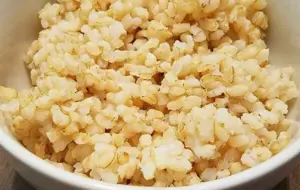
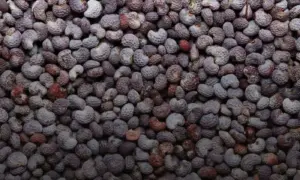
If you cook alternative pastas made from lentils, black beans, brown rice, or almost anything else, they are all nicely starchy and the water can also be used as liquid gold.
Serious Eats was skeptical about whether laypeople could tell the difference between a regular sauce and a sauce that had been emulsified with pasta water, so the website conducted a taste test comparing three different pasta dishes. The one that used pasta water in its sauce won!
Pasta water works in almost any sauce, not just tomato. It can make a sauce less greasy and can give it a silky texture.
How to rescue pasta water!
Choose one of the following methods:
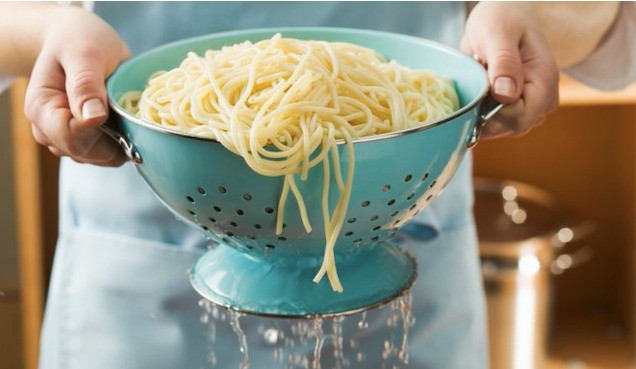
- If you insist on draining your pasta through a giant colander, first make sure you’ve ladled off a couple of cups of pasta liquid and set it aside.
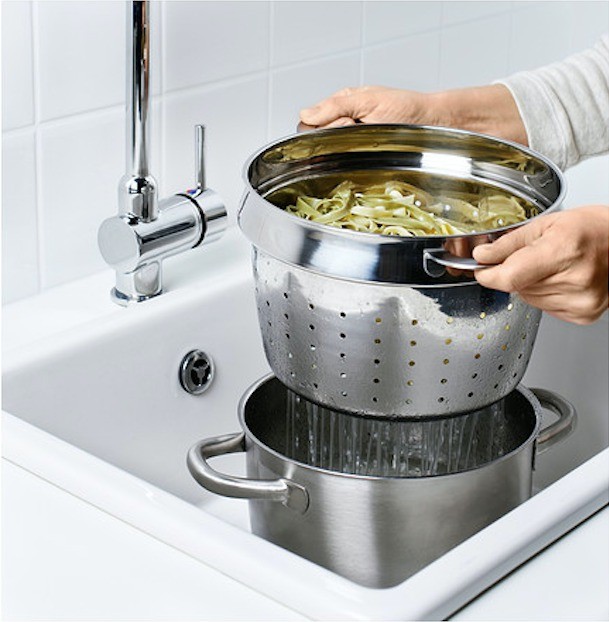
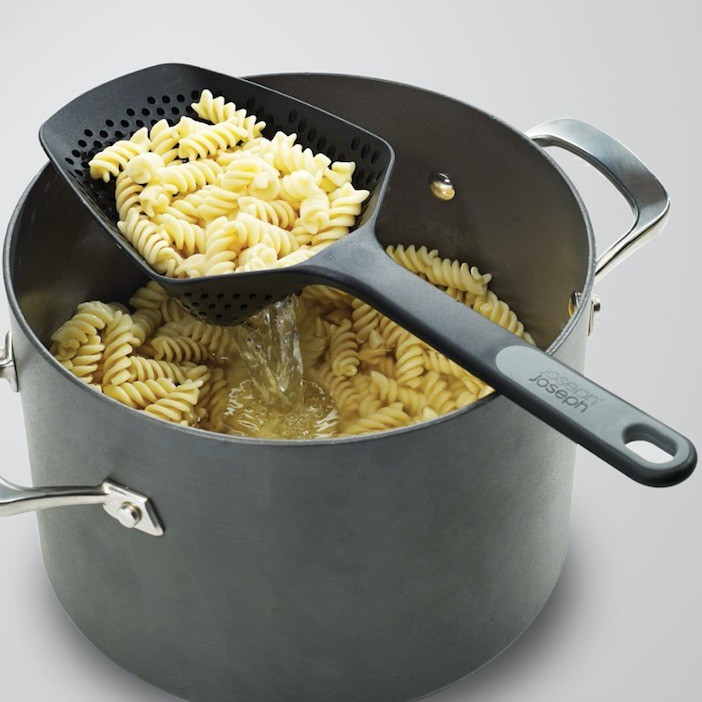
- Or you can use pots with a pasta insert. It allows you to just lift the strainer when the pasta is ready and reserve all the liquid in the big pot. These and many similar inventions are downright magical.
- For long pastas like spaghetti and fettuccine, you can use a pair of tongs to transfer the cooked pasta into the pot.
- Shorter pastas like macaroni and penne you can then fish out of the water with a special slotted ladle.
Now watch how celebrity chefs use pasta water in their sauces!
By stirring pasta water into the sauce it has a softening effect. But this is certainly nothing new, because pasta makers have been doing it for ages. So have a look at some of the best cooks who make truly incredible sauces.
First up is Frankie Celenza, one of our favorite modern pasta makers and YouTubers. He preached the benefits of pasta water. Watch how he works with pasta water in three specific cases below, and then be sure to follow his YouTube channel, because his videos are simply charming!
Videos of famous chefs using pasta water
Here Celenza prepares pasta with an onion and tomato sauce.
Here he uses pasta water to make perfectly silky pasta.
And here he uses reserved pasta water to bring some pasta back to life.
Chowhound also has a good video that explains the proper way to cook your pasta water.
And if you need more convincing about why you should use pasta water, listen to Jamie Oliver.