
Article content
Have you ever heard the saying that “a person is only as good as his tools”? It has never been more true than in the case of cookware. You usually think a lot about what foods you will cook and whether they are healthy, but not so much about what you will cook them in.
No matter how much organic food you buy or how many healthy recipes you use, even the best meal can unknowingly be turned into poison in the wrong pots or pans.
Harmful pots and pans
Cookware comes in various shapes and sizes. They differ not only in these external features, but also in their effect on the properties of food. Understanding how they affect the composition of food is an important lesson every responsible cook should learn.
Moreover, using the wrong cookware will not only change the taste of the food, but can have catastrophic consequences for your health. Let’s take a closer look now at which pans and pots you should avoid.
Ceramic pots and pans
Ceramic cookware may look aesthetically pleasing, but it also releases toxins into your food. They are made from various metals that are then coated in synthetic polymers. These, however, are softer than the metals and usually last less than a year.
Repeated heating accelerates corrosion and the appearance of scratches. When that happens, lead — which is added to these coatings to increase their impact resistance and because it provides color uniformity — begins to leach from the surface into the food.
The amount of lead leaching depends on the manufacturer, but even relatively small doses of lead are harmful to the human body.
Aluminum pots and pans
Aluminum cookware has been part of our kitchens for decades, during which it has unknowingly caused us health problems. Nowadays aluminum pots are often covered with a protective layer, but these linings wear down over time and allow aluminum to leach into our food.
Aluminum cookware may be cheaper, but the damage to your health is not worth it. When aluminum gets into your body, it accumulates in the brain, nerves, heart, lungs and bones. Aluminum has the most devastating effects on nerve cells and leads to diseases such as Alzheimer’s and Parkinson’s disease, multiple sclerosis, dementia and other damage to the entire nervous system. So if you want to save money, save it elsewhere, but never on the pots and pans you cook in.
Copper pots and pans
Many people favor copper cookware because it conducts heat well, allowing for quick and even cooking. But its convenience comes at a price. Flakes of exposed copper and toxic nickel from protective coatings rapidly leach into food and cause various types of allergies.
Additionally, exposing the body to large doses of copper reduces zinc levels and weakens the immune system, disrupts the function of multiple organs and also damages the thyroid. Therefore, avoid copper as a material for your pots and pans.
Teflon pots and pans
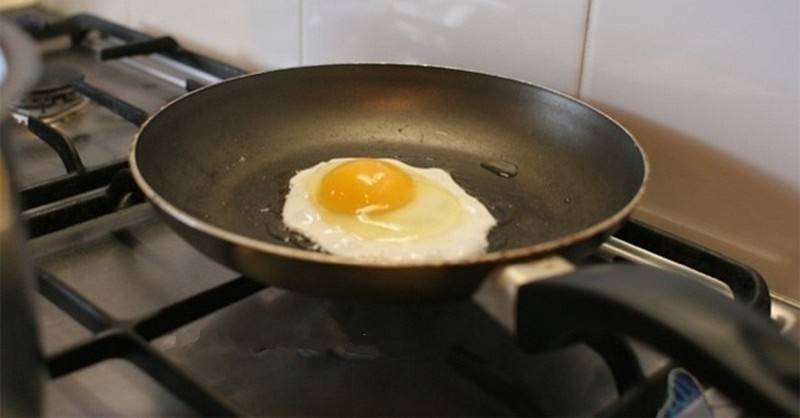
You’ve certainly heard about the harmfulness of Teflon pans and pots, but we include them here as a reminder so they aren’t accidentally forgotten. The problem with Teflon is that if it is heated above a certain temperature, it begins to release strong carcinogens into the food. Even a small lapse in attention can seriously harm your family’s health.
Healthy alternatives for pots and pans
You are probably now asking which pots and pans to use?
We have good news. There are healthy options, which are:
- Cast iron – they have similar non-stick properties to Teflon. They can be placed in the oven or on the grill. However, they need to be regularly cared for and coated with edible oil.
- Stainless steel – they look good, are somewhat non-stick, lighter than cast iron, resistant to scratches or peeling coatings (since they have none) and last a very long time.
- Glass – like stainless steel, hard glass is a durable material that does not rust and hardly releases anything into food.
It must be admitted that every type of pan and pot will to a greater or lesser extent release some substances into food.
The goal, however, is to minimize this leaching or limit it to substances that are harmless to the body – for example, a small amount of iron is harmless compared to copper or lead.


