Article content
Will it take a few decades for people to realize that microwave heating of food harms their health? The possibility certainly exists, and increasing awareness of this issue is beginning to cause concern.
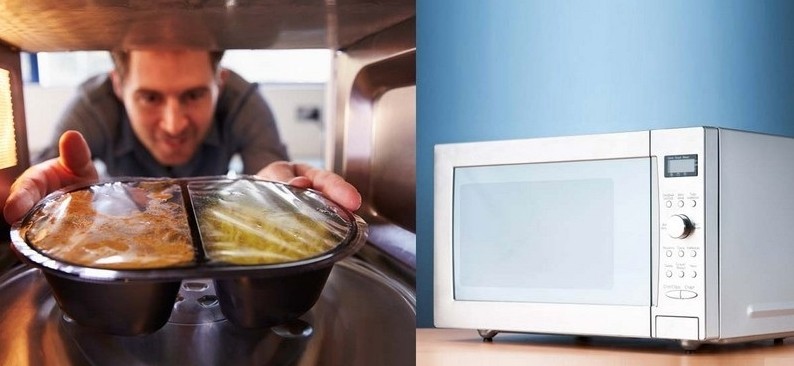
How does a microwave work?
Microwaves work by agitating water molecules at very high frequencies. They turn into steam, and that heats the food.
It may be a convenient way to prepare meals, but it’s worth noting that microwave radiation actually changes the chemical structure of food.
Although microwaves are labeled as safe, that means little these days. Tobacco, polychlorinated biphenyls, asbestos, and glyphosate were all similarly labeled as safe.
Just because government agencies like the U.S. Food and Drug Administration (FDA) or a governmental health agency approve something as safe doesn’t mean it truly is safe.
You may wonder how microwave heating differs from heating food on a stove or with steam. That question is reasonable.
The difference is that microwave radiation, unlike other common types of heating, deforms the molecules of food.
This problem also occurs in medicine. For example, it is known that microwave heating is used to warm blood during transfusions.
Microwave radiation damages individual components of the blood. There is a known case where a woman died after being given blood warmed in this way.
More and more information is emerging that microwave radiation strips food of its most basic nutrients. However, this claim requires more extensive research.
The harmful effects of microwave radiation on nutrients were studied, for example, in a 2003 paper published in The Journal of the Science of Food and Agriculture.
It examined the effect of radiation on broccoli. The results showed that broccoli lost 97% of its antioxidants this way.
For comparison, when scientists examined broccoli prepared by steaming, they found it lost less than 11% of its antioxidants.
An Australian study found that microwave radiation causes a higher degree of “protein degradation” than conventional heating.
It was shown that “at the same maximum temperature, microwave radiation causes a significantly higher degree of degradation than during conventional thermal stress when heating proteins.”
A study that examined the effect of microwave radiation on garlic found that just 60 seconds of microwave exposure can completely destroy garlic’s main active component, allicin.
Microwaves also destroy immune-supporting substances found in breast milk. These are nutrients that help the baby fight disease and are essential for its health and development.
One study, for example, found that heating breast milk caused a decrease in lysozyme activity and antibodies and facilitated the proliferation of pathogenic bacteria.
Interestingly, scientists compared microwave heating of breast milk with other heating methods and found that microwave heating damaged the milk the most.
“The use of microwave radiation at high temperatures is not recommended, and questions about the safety of its use should also be raised for microwave radiation at low temperatures.”
A Japanese study found that just six minutes of heating completely destroyed 40% of vitamin B12 in milk, thus depriving it of nutritional value.
Three recent studies examining the composition of foods found that heating reduced the levels of minerals commonly present in fresh produce by up to 40%, and another found the same regarding proteins.
A Scandinavian study from 1999 reported that preparing asparagus in a microwave causes the vegetable to lose a large amount of vitamins.
What are you using to reheat food in the microwave?
Today it should be clear to everyone that just any plastic containers should definitely not be used to heat food.
Therefore the FDA recommends that all plastic containers that manufacturers claim are suitable and safe for such heating should be labeled.
However, despite labeling, there are reasons to believe we should avoid using them.
Many studies have shown that several plastic products contain various types of chemical substances that disrupt hormone function. Heat causes these chemicals to leach from the plastic into the food you then consume.
The journal Toxicology Letters states:
Using a sensitive and quantitative competitive enzymatic immunoassay ELISA, it was found that from a polycarbonate bottle between 0.20 ng/h and 0.79 ng/h of BPA was released into the water.
… The release of BPA into water at room temperature was not related to whether the bottle had been used before or not. Exposing the bottle to boiling water caused the release of BPA into the water to increase 55-fold.
Again, we remind you that heat causes the release of chemicals. So carefully consider what you heat your food in.
Even plastic containers labeled as suitable for microwave heating (including those labeled BPA-free, since that does not rule out the presence of other chemicals) cannot be considered safe.
According to the Natural Resources Defense Council (NRDC), “the term safe in this context means that the amount of chemicals that get into food when heated from plastic is much lower than what is harmful to health.
You should be wary of this labeling, because, for example, polycarbonate—plastic labeled #7—should not be used in the microwave at all. Even if the product is labeled as microwave-safe.
When heated, it releases bisphenol A (BPA), which disrupts hormone function.’
You should choose the products you use daily carefully.
In the past we’ve repeatedly witnessed information emerge that completely changed people’s views about a product or drug. Just look at cigarettes.