
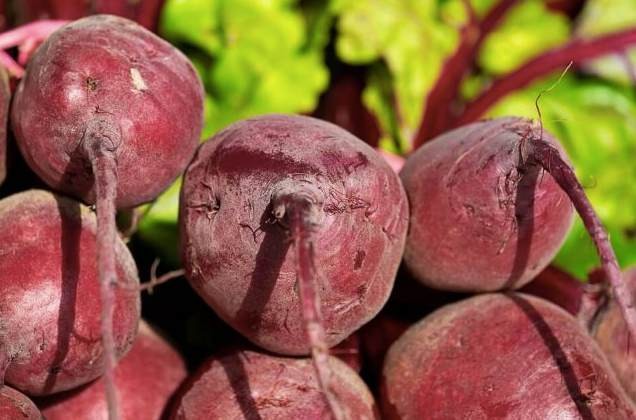
Why include beetroot in your diet?
1. Beetroot fights oxidative stress and damage caused by free radicals. This is mainly due to substances such as betalains and polyphenols.
2. It strengthens the walls of blood vessels and capillaries, thanks to its high content of B vitamins.
3. Beetroot is rich in folic acid and potassium – which protect the heart – as well as magnesium that strengthens bones, phosphorus and iron – which increase energy production – and finally iodine, which ensures the biosynthesis of thyroid hormones.
4. Vitamin B12 and folic acid support the production of red blood cells.
5. Folic acid also regenerates and rejuvenates the body by stimulating the formation of new cells.
6. The pigment betalain detoxifies the body and eliminates toxic substances from it.
7. Betacyanins in beetroot have a strong anti-cancer effect by suppressing the proliferation of cancer cells.
8. A high fiber content supports good digestion and nutrient absorption.
9. Beetroot speeds up metabolism. This is especially helpful for people trying to lose weight, but also for athletes who need a lot of readily available energy.
10. The absorption of vitamin D from food is much more efficient in the presence of compounds from beetroot.
11. Beetroot has proven to be an effective food for the prevention of dementia and other neurodegenerative diseases.
12. Beetroot contains more pectin than an apple or a carrot. Pectin is responsible in the body for binding and flushing out heavy metals and radioactive substances. Pectin also prevents the development of other diseases, prevents the spread of harmful bacteria in the intestines and also has strong anti-cancer effects, especially in leukemia.


