Article content
Given the extent of antibiotic use everyone should be on guard against their side effects. In April 2018 they actually ranked first among the most commonly prescribed drug classes. Their sales reached $40 billion worldwide.
From 2000 to 2015 antibiotic use in people rose by nearly 40%. And some economists now say that if nothing changes, antibiotic resistance will be responsible for 10 million deaths worldwide by 2050.
It’s clear many people use antibiotics (and that a lot of money is made from them), but aren’t they harming us more now than they help? Antibiotic resistance keeps rising, and these drugs are causing more and more health problems globally.
In fact, the recent article “Deadly nightmare: CDC says antibiotic-resistant bacteria infected 221 Americans in 2017” is just one of many recent reports about the terrifying side effects of antibiotics.
I’m going to tell you more about the short-term and long-term side effects of antibiotics …
What is an antibiotic?
Exactly what is an antibiotic? Definition of antibiotics: A drug used to treat bacterial infections.
When antibiotics first appeared on the scene, they were naturally derived substances made from microorganisms that selectively suppressed the growth of other microorganisms.
A perfect example is penicillin discovered in 1926. The mold-produced antibiotic suppressed certain kinds of harmful bacteria. Today we have many more antibiotics on the market and many of them are synthetic or man-made.
Do you know the 10 most widespread antibiotics and their uses? Common generic antibiotics include:
- amoxicillin
- doxycycline (Doxybene)
- cephalexin
- ciprofloxacin
- clindamycin
- metronidazole
- azithromycin
- sulfamethoxazole / trimethoprim
- amoxicillin / clavulanic acid
- levofloxacin
Common uses for antibiotics include treatment of acne, bronchitis, conjunctivitis, ear infections, sexually transmitted diseases, skin infections, streptococcal pharyngitis, traveler’s diarrhea, upper respiratory tract infections and urinary tract infections.
It is important to note that antibiotics have zero effect on viral infections, which is why they should never be used for them.
Examples of viral infections for which people incorrectly choose antibiotics? The common cold or the flu.
Some people even take antibiotics for sore throat, but that should never be recommended unless it’s a bacterial infection such as strep. As the CDC states: “Most sore throats will get better on their own without antibiotics.”
A common phenomenon is patients stopping antibiotics early because of side effects. Many doctors warn that premature discontinuation can strengthen bacteria or make them resistant to further treatment.
According to the World Health Organization:
“There is growing evidence that for some infections shorter courses of antibiotics may be just as effective as longer ones.
Shorter treatment makes more sense — it is more likely to be taken correctly, has fewer side effects, and is likely to be cheaper.
It also shortens the time bacteria are exposed to antibiotics, reducing the speed at which pathogens develop resistance.”
Whether you take antibiotics when it’s inappropriate (viral infections), or when it may be warranted (bacterial infections), let’s discuss some of the many possible side effects of antibiotics.
8 potential serious side effects of antibiotics
How do antibiotics affect the body?
These are just a few of the many possible and undesirable side effects of antibiotics on the body:
1. Body infections resistant to antibiotics
Each year more than 23,000 people die in the U.S. because of antibiotic-resistant bacteria (about 400 estimated in Slovakia) and the CDC warns of a “nightmare” of spreading resistant bacteria.
One of the biggest overall concerns about antibiotic use is that we are witnessing infections that are now resistant to antibiotics. Why is this happening?
The main reason is certainly incorrect and excessive use of antibiotics, but also the use of antibiotics in the food we eat. Antibiotics have become widespread especially in commonly sold meat, dairy products and fast food.
As the CDC warns:
“Antibiotic resistance has been called one of the most pressing public health problems. Antibiotic resistance can cause previously easily treatable illnesses to become dangerous infections, prolonging the suffering of children and adults.
Antibiotic-resistant bacteria can spread among family members, classmates and coworkers and can threaten your community.”
Dr. Katherine Fleming-Dutra, deputy director of the Office of Antimicrobial Stewardship at the Centers for Disease Control and Prevention in Atlanta, notes:
“Antibiotics can cause side effects and lead to antibiotic resistance each time they are used.”
2. Longer-lasting infections
As a result of antibiotic use people take longer to recover from infections that were once easily treated with antibiotics.
Bacterial infections such as urinary tract infections and pneumonia are now becoming much harder to treat.
The type of antibiotic most commonly used to treat urinary tract infections is now considered ineffective for more than 50% of patients in many parts of the world.
According to the Council on Foreign Relations:
“Antibiotics, not even a century after their introduction, face an existential crisis. Due to excessive use in humans and animals, drugs against bacteria are becoming less effective.”
Antibiotics are clearly letting us down over time.
3. Allergies and asthma
Recent research now shows a connection between antibiotic use and the development of allergies.
Large studies published April 2, 2018 analyzed health records of over 792,000 children born from 2001 to 2013 and found a correlation between children who used antibiotics (or antacids) from birth to six months of age and the development of allergies as well as asthma.
According to the study’s lead author Dr. Edward Mitre, exposure of children to antibiotics appears to roughly double their later risk of asthma, contributing to a 50% increase in the risk of allergies to dust, fur and pollen (allergic rhinitis); eye allergies (allergic conjunctivitis); and anaphylaxis.
4. Diarrhea
Diarrhea is unpleasant but a very common side effect of taking antibiotics and can lead to further complications such as dehydration and electrolyte imbalance.
Diarrhea can persist for several weeks after stopping antibiotics, whether taken by children or adults.
5. Fatigue
Speaking of antibiotic side effects, fatigue definitely belongs on the list of possibilities.
So as if being sick and possibly already feeling tired weren’t enough, antibiotics can make you feel even more exhausted.
This side effect of antibiotics has been known for decades. People taking antibiotics sometimes feel tired, or even experience extreme fatigue.
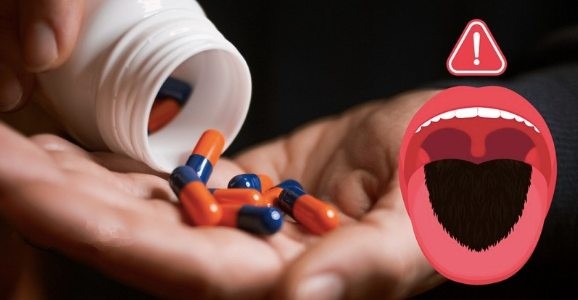
6. Swollen, black or “hairy” tongue
What are the side effects of amoxicillin, a penicillin-type antibiotic?
Well, there are many, but at the top of the list is a swollen, black or “hairy” tongue? What on earth is that? No, this is not a joke.
Common side effects of amoxicillin include:
- nausea
- vomiting
- diarrhea
- stomach pain
- vaginal itching or discharge
- headaches
- rashes
- swollen, black or “hairy” tongue
And if you think a tongue with such a very odd description is the worst, think again. Other serious side effects of amoxicillin include:
colitis caused by an overgrowth of Clostridium spp bacteria in the intestines:
- jaundice
- seizures
- hives
7. Disrupted menstrual cycle
Can antibiotics interfere with your period? The ability of antibiotics to disrupt the menstrual cycle is still debated, with research on the topic going back to 1947, to a study on the effects of penicillin on the menstrual cycle.
It seems that some women do not notice any disruption of their cycle when taking antibiotics, while others do.
Because both antibiotics and hormones must be processed by the liver, it makes sense that taking antibiotics could adversely affect a woman’s metabolism of estrogen and progesterone.
If antibiotics possibly disrupt hormonal balance, menstrual irregularities can appear. According to other theories, delayed periods may be caused not by antibiotics but by the physical and emotional stress of illness.
8. Hallucinations, psychotic reactions and tendon rupture
Recently the class of antibiotics known as fluoroquinolones made headlines because experts suspect they may damage mitochondria and cause irreversible nerve damage.
Researchers are now trying to determine the reason.
Fluoroquinolones have been linked to alarming side effects such as depression, brain fog, and even hallucinations and psychotic reactions.
About 10 years ago the FDA even asked manufacturers of fluoroquinolone antibiotics to add a warning “black box” to alert doctors and patients to the increased risk of inflammation, and even tendon rupture, as possible side effects of these antibiotics!
How long do antibiotic side effects persist?
That depends on the antibiotic, its specific side effects and the individual, but it is known that antibiotic side effects last for several weeks.
For example, in mild cases of antibiotic-associated diarrhea, the diarrhea can persist for another two weeks after stopping them. In more severe cases antibiotic side effects can last several weeks.
Alternatives to antibiotics
Fortunately there are many incredible natural remedies that research has shown to be nearly as effective, or even as effective, as antibiotics — and without their undesirable side effects!
If we are to stop antibiotic-resistant superbugs, it is important to consider natural alternatives to antibiotics that can be used to achieve an effective, safer result.
Unlike antibiotics these natural options are not known to produce superbugs.
First on the list is raw garlic, garlic oil and garlic supplements. Garlic is known for its antibacterial, antiviral, antifungal and antiprotozoal properties.
Garlic oil is one of my favorite natural remedies for ear infection.
Another incredible natural alternative to antibiotics is oregano oil. Oregano, or common oregano (Origanum vulgare), is a plant you may already love for its culinary uses, but it also has a long history of fighting infections.
Oregano oil contains active components like carvacrol and thymol, which scientific studies have shown to have strong antibacterial and antimicrobial properties. Oregano oil is by far my favorite natural antibiotic alternative.
Another incredible alternative to antibiotics is colloidal silver.
In vitro research conducted in 2017 demonstrates that naturally synthesized silver nanoparticles in colloidal silver exhibit impressive antibacterial and antifungal activity.
Colloidal silver is often recommended as an alternative treatment for sinus infection or the common cold, which are two health situations where antibiotics are often misused, since the common cold is always caused by a virus and sinus infections are most commonly viral.
Besides garlic and oregano there are other antibacterial foods you can eat. My favorites that I eat regularly include Manuka honey, onions, mushrooms and turmeric.
Final thoughts on the side effects of antibiotics
Excessive and improper use of antibiotics creates dangerous, antibiotic-resistant bacteria known as superbugs.
Antibiotics are effective only against bacteria (now but not always!), not viral infections.
There are many known side effects of antibiotics and with ongoing research we are learning even more, for example about the link between childhood antibiotic use and the development of allergies and asthma.
Many people take antibiotics and are not aware of the range of possible bizarre and downright frightening side effects, which is why necessary awareness about possible side effects should exist before you take an antibiotic or give one to your child.
There are natural remedies like oregano oil, garlic and colloidal silver that have demonstrated strong, antibiotic-like properties.