
Article content
Long daily sitting is a huge strain on your body. It increases the risk of diabetes and even raises the number of cancer cells your body produces each day.
Of course, at first this is not a problem, because a healthy body can easily deal with these cancer cells. It becomes worse if this ability later declines.
It is estimated that a sedentary lifestyle can take up to 8 years off a person’s life. That’s as much time as you spent visiting elementary school!
As time goes by, your largest muscles begin to undergo atrophy and your metabolism slows. If stress is added to that, it’s a recipe for disaster.
Sitting is destructive for you
Long-term sitting is literally destructive for the human body.
Just consider what a typical day looks like for a modern person – in the morning you sit in the car on the way to work, there you spend 6 to 8 hours sitting, then you again sit in the car on the way home.
In the evening, tired, you sit down on the couch and spend more hours sitting watching TV.
The sedentary lifestyle and its impact on health is beginning to be called the “new smoking.” It is literally an epidemic affecting a huge number of people.
Long-term sitting for you means a significant increase in the risk of the following diseases:
- high blood pressure
- diabetes
- obesity
- bad cholesterol
Standing up, stretching, or walking are excellent ways to at least partly counteract some of the terrible health problems that long sitting brings.
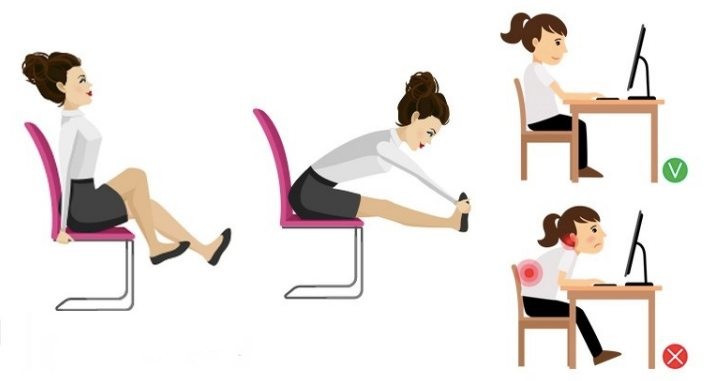
You can even practice so-called desk yoga to increase circulation in your limbs.
Why is long standing also bad?
As we already mentioned, sitting is terrible for health, but long-term standing is no better.
The latest trend is switching from traditional desks to standing desks. However, experts say that such a permanent change is just as bad an idea.
Long standing can place an undue burden on your circulatory system.
Many people have problems with long-term standing. In addition, it can create excessive strain on the hip joints, knees, and ankles, which significantly increases the risk of arthritis and joint problems.
So what to do?
The solution seems to be interrupting sitting and taking more frequent walks, whether around the office or outside. Of course, that is often not possible.
In such a case, it is recommended to perform various desk exercises. Examples of such exercises can be found in the following video (it is in English, but clear enough to understand):
You can’t sit all the time and you also can’t stand all the time. It’s good to have an adjustable desk at work that has flexible legs and can be extended. That way you can both sit and stand at it.
In addition, here are several other recommendations you can do for your health to limit the negative impact of long sitting:
- desk yoga
- walking meetings
- regular walks, preferably scheduled in your computer calendar to remind you when it’s time
- exercise after work
- dancing during breaks (dancing is great for the whole body and is a more productive form of movement than ordinary walking)
- measuring how much time you sit during the day
- keeping only a small bottle or glass of water with you (which forces you to get up more often for water)
- visiting the gym after work
Conclusion
The more you move regularly, the better. And not only for you, but also for the loved ones in your life.
Your employer will also benefit from this in the form of your increased productivity. And that is important if you want your company to be a happy and creative place where you achieve success.


