Article content
Napping during the day can be excellent! However sometimes after waking you may feel weaker or more tired than before sleeping.
Why does this happen?
Dr. Michael Breus explains:
” If you nap for more than 30 minutes, you enter deep sleep. If you feel worse after waking than before, it means that during the longer sleep you entered one of its phases from which it is hard to get out “.
Benefits of daytime sleep
So, what are the most ideal ways to nap?
A short sleep can be considered a quick reboot of the brain. Compare it to how a computer works.
When it starts to become slow and its responses are sluggish, it’s time to restart it. After that everything is again as fast as it should be.
The brain is similar in this regard. When you fall asleep, even for a short while, it’s possible to immediately notice benefits in several areas.
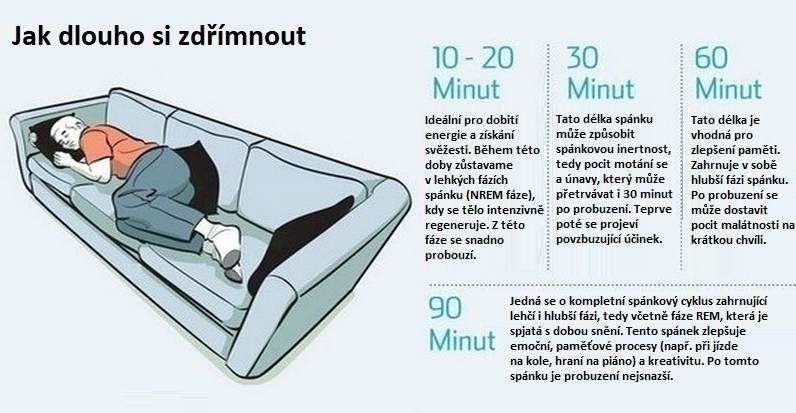
Sleep experts say that when you don’t have much time, even a 10 to 20 minute nap can give you a quick boost of alertness and mental clarity .
You can use it during the day, late at night, or before something important.
Or before the final round of a computer game, in which you are about to defeat the player champion and therefore need a bit of extra speed for your reflexes.
Extending a productive day to the maximum
When I tried to maximize the time I was awake, I studied things around sleep cycles.
I also focused on ways to minimize the amount of sleep while maintaining full mental strength.
The result was that I chose a cycle that contained a block of time for the main sleep and, in addition, several naps spread throughout the day that lasted about 20 minutes.
I found that after a 20-minute nap I feel great. I was very alert, with a clear mind, and I had no trouble working easily for the next 3 to 4 hours.
I also found that at the start of the experiment with sleep cycles I began to lose cognitive clarity gradually as I got closer to the end of the day.
It was a transitional phase of the cycle, but I felt that my body/brain lacked enough deep sleep.
According to Dr. Mednick, this is an area where longer 60-minute naps are better for increasing the brain’s cognitive abilities .
Dr. Mednick also emphasizes that a 90-minute sleep will likely cover a full sleep cycle . This then aids creativity, emotional and procedural memory needed, for example, for learning a skill.
Waking up after REM sleep usually also means the smallest amount of the so-called sleep inertia (when you have trouble getting out of bed).
recap
A study that evaluated the refreshing effects of short and ultra-short sleeps found that a 5 to 10 minute nap can create better alertness and increase cognitive abilities.
So, if you’re looking for a quick battery recharge: nap for 5 to 20 minutes.
If you’re interested in deeper sleep revitalization: nap for 60 to 90 minutes.
final tip
During shorter naps, be slightly inclined upwards. This will prevent you from falling into deeper sleep phases.
If you even dream during these short sleep periods, it may be a sign that you suffer from a sleep deficit.