Article content
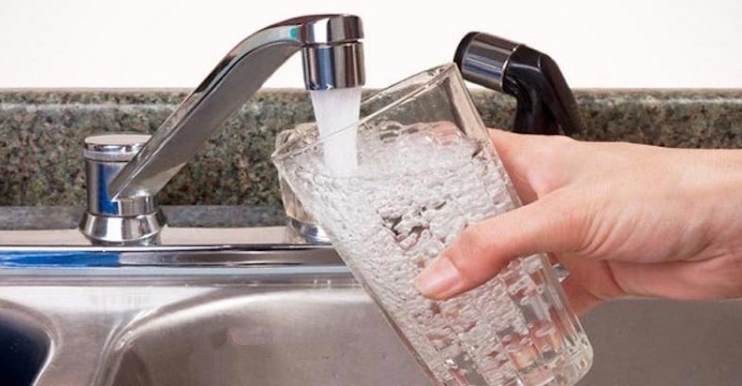
The fact is that tap water is not as clean and harmless as it is usually claimed to be.
Besides common beneficial substances such as minerals magnesium, calcium, sodium, sulfates or bicarbonates, it often contains small amounts of harmful substances, for example nitrates, herbicides, hormones, antibiotics or even lead, aluminum and lithium.
Drinking such water may not cause acute problems, but with long-term consumption those substances can begin to cause health complications.
Heavy metals accumulate in the body, which then places a heavy burden on several important organs, including the heart, brain and liver.
Heavy metals are linked to diseases such as Alzheimer’s disease, heart and kidney disease, behavioral changes in children and adults, epilepsy, Parkinson’s disease or even paralysis.
The good news is that there is one herb that can reliably purify water. It has the ability to bind various harmful chemicals, including nickel and lead.
How coriander cleans water
Coriander contains substances that bind to heavy metals, pesticides and other toxic chemicals found in tap water.
The effectiveness of coriander as a cleaning agent is further enhanced by the outer architectural structure of the walls of its leaves.
A study carried out by Douglas Schauer from the School of Technology in Lafayette, in the U.S. state of Indiana showed , that out of the many methods for cleaning water, coriander is by far the cheapest and most effective.
Its use is recommended mainly in areas that are poor and where the water is fairly polluted. In the study they tested several plants and coriander clearly won.
Specifically they found that coriander has a very strong bio-absorption potential.
Activated charcoal is usually used for purifying water and for binding heavy metals. However, it is much more expensive and less practical than using coriander.
How to clean water with coriander
Cleaning water with coriander is indeed simple.
Take a handful of fresh leaves, put them into a jug or container with roughly 2 liters of water, stir and let it sit for a few minutes.
Then strain the water using a funnel with a sieve and such water should already be free of most health-harming substances.
The stated amount is recommended for more heavily contaminated water. For less contaminated water you can use a smaller amount of coriander leaves, or use them repeatedly.