Article content
There are several causes for drooling during sleep, some of which are related to health conditions.
Every now and then it happens to almost all of us that saliva leaks from our mouths while we sleep. Did you know, however, that when this phenomenon occurs regularly and excessively, it can be a sign of a disease or some disorder in the body? Let’s look at the reasons for drooling during sleep and how you can reduce or stop it.
Why do we drool?
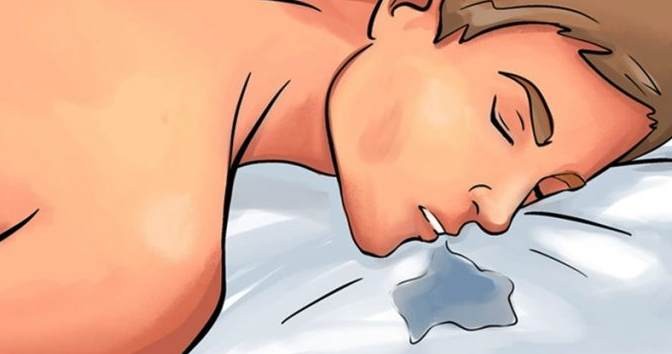
During sleep our facial muscles, as well as the swallowing reflex, are completely relaxed. Because saliva accumulates in the mouth when we sleep, it can start to slowly leak out, since relaxed facial muscles can lead to a slightly open mouth. That’s why we end up with a wet pillow under our head, which is not very comfortable to sleep on.
Excessive drooling, or hypersalivation, can be a sign of a neurological condition or blocked nasal passages. People who have already had issues, such as a stroke, also tend to drool more often and excessively.
How to reduce or stop drooling
1. Clear your sinuses>
One of the main reasons for drooling is a blocked nose, which causes a person to breathe through the mouth. Unblocking the nasal cavities can be a good way to avoid having a wet pillow every night. Here are some methods that can help loosen your sinuses:
-
- a hot shower will clear the nose and allow normal breathing at night
- essential oils, especially those containing eucalyptus, will help you breathe and also sleep better
- Natural nasal drops and neti pots for rinsing can also help you
- Also try to treat any nasal infections as quickly as possible. Otherwise you could end up with various complications
2. Change your position
You have the lowest risk of saliva leaking from your mouth when lying on your back. Conversely, if you sleep on your side or stomach, accumulated saliva will likely flow out of your mouth onto the pillow.
3. Get tested for sleep apnea
Sleep apnea is a serious disorder that causes breathing problems during sleep, which leads to constant interruptions of sleep and feelings of fatigue in the morning after waking. The main symptoms include drooling and snoring. If you have any suspicion that you have this disorder, contact your doctor. Remember that factors such as smoking and obesity increase the risk of developing this disorder and breathing problems in general.
4. Use special devices
After consulting with your doctor you can obtain aids that reduce drooling. These can be various dental devices that help you close your mouth or swallow better, which helps you sleep better.
5. Make sure you are taking the right medication
If you are taking any medication, make sure it does not cause excessive drooling. Some antibiotics, for example, can cause hypersalivation and may be the reason why you drool at night.
6. Elevate your head
Keeping your head in a higher position on the pillow can reduce drooling. Make sure your pillow is thick enough and comfortable.
7. Consider surgery
Sometimes doctors may recommend surgery and removal of the salivary glands. This usually happens when serious neurological problems are behind hypersalivation. Of course, you should try less invasive methods first and surgery should be a last resort.
Does it happen to you often that you drool at night? Will you try any of the recommendations in the article? Write to us in the comments!