
Article content
Milk is the only beverage that is still aggressively pushed on children under the guise of healthy nutrition, even though the opposite is true — it is a food that contributes to disease.
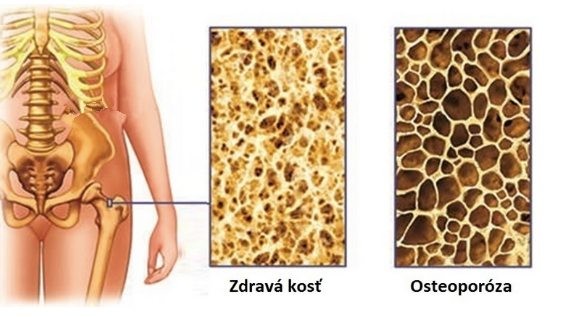
Drinking pasteurized milk is by no means as good for overall health and bone health as the dairy industry tries to convince us.
The truth is that the fairy tale “about milk being healthy for the body” is increasingly being examined by many independent scientists and researchers who are fed up with the propaganda surrounding milk.
According to an extensive study conducted on thousands of Swedes, long-term consumption of cow’s milk has harmful effects on health. The research was published in The British Medical Journal (The British Medical Journal (BMI)).
The study examined 61,433 women aged 39 to 74 over more than 20 years and 45,339 men of similar ages for 11 years. It was found that people who drank more cow’s milk were more prone to death or to bone fractures during the study period.
The risk was most noticeable in the group of women who followed the recommendation to drink milk for the purpose of preventing bone fractures resulting from osteoporosis.
Women who drank three or more glasses of milk a day had nearly double the risk of death during the study period compared to women who drank only one glass of milk a day.
One glass here is defined as a 200 ml serving. They also had a 16 percent higher likelihood of fracture of any bone in the body.
Why milk causes osteoporosis and bone fractures
Over the past 50 years the dairy industry has worked hard to instill the idea that pasteurized dairy products such as milk or cheese are a significant source of naturally available calcium.
This claim is completely false. After the pasteurization process we are left only with calcium carbonate deprived of the chelating agent, which cells cannot absorb.
The body then uses calcium from the bones and other tissues to reach the necessary blood level of calcium carbonate. The result of this process is osteoporosis.
Pasteurized dairy products also contain very little magnesium needed in the proper ratio for calcium absorption. Most experts will agree that the minimum calcium-to-magnesium ratio is 2:1, ideally 1:1.
So milk, which has a calcium-to-magnesium ratio of 10:1, is problematic. You may consume 1,200 mg of calcium from dairy products, but you will be lucky if your body absorbs even 1/3 of that amount.
More than 99% of the body’s calcium is contained in the skeleton, where it contributes to the mechanical strength of the bone. Consumption of pasteurized dairy products reduces the real calcium intake below the optimal level.
The skeleton is then used to fill this optimal level of calcium requirement, which in the long term leads to osteoporosis.
The incidence of osteoporosis in Western countries
Dairy products are forced upon us from birth, yet the USA and Europe are areas with the highest incidence of osteoporosis risk.
Currently the populations of the USA, Canada, Norway, Sweden, Australia and New Zealand have the highest incidence of osteoporosis.
The test for measuring pasteurization is called the negative alkaline phosphatase test.
When milk is heated to 74 degrees Celsius (with UHT milk even more) and pasteurization is completed, the phosphatase enzymes are destroyed 100 percent.
And guess what! Phosphatase enzymes are enzymes that are key to the absorption of minerals including calcium! Phosphatase is the third most abundant enzyme in raw milk.
People who drink raw milk therefore enjoy higher bone density. Several studies have confirmed greater bone density and longer bones in animals and people who consume raw milk compared with those who consume pasteurized milk.
Osteoporosis and estrogen
The pharmaceutical industry for the past 40 years has hammered into women’s heads the idea that estrogen supports the building of bones more resistant to fractures, that it is a prevention against osteoporosis.
This was intended to support the sale of hormone drugs for women in the menopausal period (HRT), such as PREMARIN and Prempro.
Diet also increases estrogen levels in the body. Foods prepared from dairy products account for 60 to 70% of dietary estrogen.
Estrogen today is obtained mainly by modern industrial farms by milking cows during pregnancy. The longer the pregnancy period, the higher the estrogen content in the milk, from 15 picograms (pg)/ml up to 1000 pg/ml.
The International Dairy Board would like you to believe that “there is no evidence that protein-rich foods, such as dairy products, adversely affect calcium levels in the body or bone health.”
However, that same board knows this is not true, and elsewhere states:
“Excess protein intake in the diet, especially of pure proteins, increases urinary calcium excretion. This loss of calcium can potentially cause low body calcium levels and can lead to bone thinning and osteoporosis.
Bone thinning and osteoporosis can thus be attributed to increased levels of endogenous acids that arise from protein metabolism, and which consume calcium from the bones to neutralize alkaline salts.”
By drinking milk we take in more inflammatory molecules
The most likely explanation for the adverse effects of drinking milk on health is the creation of harmful inflammation caused by galactose.
Galactose is a waste product of lactose, the main milk sugar. In various groups of studied people the research team found that people who drank more milk had a higher occurrence of inflammatory molecules in their urine.
Moreover, women who consumed larger amounts of cheese and yogurt had a lower probability of bone fractures and death during the study compared with women who consumed smaller amounts of dairy products.
This only confirms the hypothesis about inflammatory molecules, because yogurt and cheese contain much less lactose and galactose than milk.
Milk as fuel for cancer
Among almost 60 hormones there is also one significant growth hormone with a name similar to insulin — Insulin-like Growth Factor One (IGF-1).
Nature’s whim is that this hormone is identical in cows and humans.
The diet we consume affects how much IGF-1 will circulate in our blood. A diet overall richer in calories or animal protein usually increases IGF-1 levels, and milk appears to play an unusually disturbing role here.
Imagine this hormone as “cellular fuel” for every type of cancer … (in the medical world it is said that IGF-1 is a key factor in the rapid growth and spread of breast, prostate and colon cancer, and there is suspicion that it is most likely directly related to ALL types of cancer).
IGF-1 is a common component of EVERY milk … in newborns we expect rapid growth!
But why do 50% of obese consumers think they need MORE growth? Consumers don’t think anything about it because they have no idea about this problem … just like most of our doctors.
Studies funded by the dairy industry confirmed a 10% increase in IGF-1 levels in adolescent girls who drank one pint (473 ml) of milk daily, and also a 10% increased IGF-1 level in postmenopausal women who drank 3 servings of low-fat or semi-skimmed milk daily.
IGF-1 also promotes undesirable growth — cancer growth — and accelerates aging. IGF-1 is one of the strongest cancer triggers ever discovered.
Excessive stimulation of growth via IGF-1 leads to premature aging, whereas reducing IGF-1 levels slows aging.
A study published by the World Cancer Research Fund and the American Institute for Cancer Research in 1997 states that in many studies cancer risk was directly proportional to milk consumption.
Pasteurization was intended to mask the low quality of milk, it also destroys nutrients and enzymes
Why do people still drink milk?
Because they think that drinking milk is safe thanks to pasteurization. However, heating destroys many milk bacteria — this hides the evidence of dirt, pus and filthy procedures during dairy production.
It is cheaper to produce dirty milk and destroy the bacteria by heating than to maintain clean production and care for the health of the cows.
To eliminate pathogens, milk must go through “cleaning”, “filtering”, “bactofugation” and two “degassing” procedures.
Each of these procedures uses temperatures in the range of 38 ° – 79 ° Celsius. Dairies rely on many temperature procedures to mask poor hygiene levels: milk full of pus, manure and waste.
A consumer report found that 44% of 125 types of pasteurized milk contained up to 2,200 organisms per cm3 (fecal bacteria, intestinal bacteria).
Pasteurization also destroys vitamin C and damages water-soluble B vitamins, thereby reducing the nutritional value of milk.
Calcium and other minerals become unusable to the body through pasteurization. The chemical reaction between proteins and sugars — known as the Maillard reaction — occurs at higher temperatures and causes darkening and loss of color in milk.
Pasteurization also kills milk enzymes, proteins, antibodies as well as beneficial hormones, resulting in devitalized, “dead” milk. Milk enzymes help digest lactose; enzymes and proteins together enable the body to absorb vitamins.
Protective enzymes in milk are ineffective after pasteurization, making milk more prone to spoilage.


