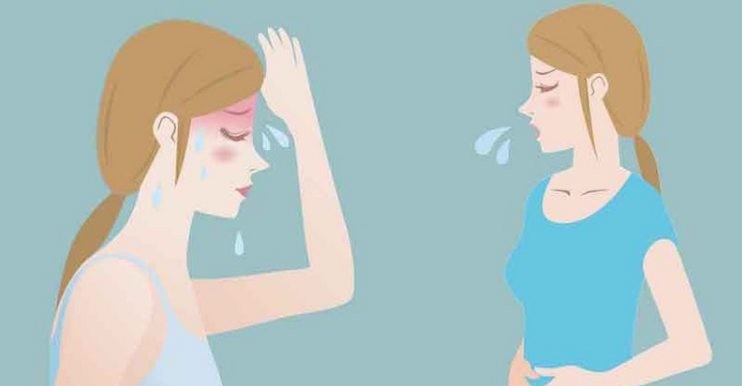
Article content
Dehydration is a condition in which your body does not have as much fluid as it needs for its optimal functioning.
Water makes up 60 to 80% of the total weight of our body. It is therefore understandable that its deficiency necessarily manifests in various problems.
Consuming an adequate amount of fluids is also critical for your body to perform optimally. If this doesn’t happen, it will send you a few symptoms that are good to understand.
Dehydration does not always present only as thirst. Thirst is the last symptom, by which point many things in the body are already disrupted. And this should be prevented.
Here are 10 warning signs that your body is chronically lacking water:
1. Dizziness or headaches
Your body uses not only water but also minerals and other substances dissolved in it. When fluids are lacking, chemical reactions occur in the blood to which your brain is especially sensitive.
Usually mild dizziness occurs first, which gradually turns into pain. The more water you lack, the stronger the pain.
This is because with reduced water in the blood the brain is less well perfused, blood vessels dilate and swelling occurs, which further intensifies the pain.
2. Bowel blockage and constipation
Water helps food pass smoothly through the digestive tract. If there is too little of it in the body, the contents of the intestines thicken and their passage slows down.
Regular bowel movements mean at least once every 24 hours. If you have bowel movements less often, it’s a clear sign that you suffer from chronic dehydration.
3. You feel dizzy when you stand up suddenly
Without enough fluids in the body, blood pressure can drop and you may begin to feel dizzy, especially with a sudden change of body position.
This is particularly dangerous if you normally have low blood pressure. Then your dizziness will be even more intense.
4. Feeling hungry instead of thirsty
Early signs of dehydration can be mistaken for hunger instead of thirst. This is a consequence of changes in your metabolism.
If you ate normally during the day but still feel a mild hunger, especially for foods that contain water like fruit, try drinking a glass of water instead of snacking.
5. Your urine is too yellow or dark
A common sign of dehydration is also when your urine colors more toward yellow or even dark. It means there is a high concentration of waste products in the urine.
When you are adequately hydrated, urine contains a higher amount of water, is lighter and urination is easier. With dehydration, emptying the bladder can sometimes even cause burning.
6. The only thing you can think about is sleep
If you can’t shake feelings of tiredness even after drinking coffee or taking a walk in the fresh air, try drinking more water.
Adequate fluids ensure that your blood is sufficiently thin and under the right pressure to flow through the vessels without problems and supply cells with oxygen.
Dehydration worsens the oxygenation of cells and impairs the function of the brain and muscles, and we then feel lethargic.
7. You overheat
Your body needs water to regulate body temperature through sweating. Evaporation is the most effective way of cooling, more effective than direct heat exchange between two surfaces of different temperatures. If you have a shortage of fluids, sweating stops and the body overheats. Therefore, when you feel hot flashes, increase your water intake.
8. Dryness in the mouth and lips
A typical sign that your body desperately craves water is dryness in the mouth and around the lips. A slight swelling of the tongue may also occur.
Your mouth is naturally a moist environment, so if it dries out, it’s time for a glass of water!
9. Muscle cramps start to appear
Adequate hydration and electrolyte balance are essential for proper muscle contraction. When you are dehydrated, electrolyte levels are affected as well.
With low levels of sodium and potassium, sporadic but painful muscle cramps can occur. A muscle or part of it may involuntarily contract and cause a cramp.
Sufficient hydration can effectively prevent this.
10. Your skin stops being elastic
Has it happened to you, for example, that you pulled up the skin on the back of your hand and instead of quickly returning to its original position, it remained wrinkled?
This is a typical sign that your body is lacking water.
This phenomenon usually occurs with moderate to severe dehydration (when 10% to 20% of your body is dehydrated). In that case, rapid but gradual rehydration of the body is necessary to avoid a shock-like jump in blood volume and pressure.