
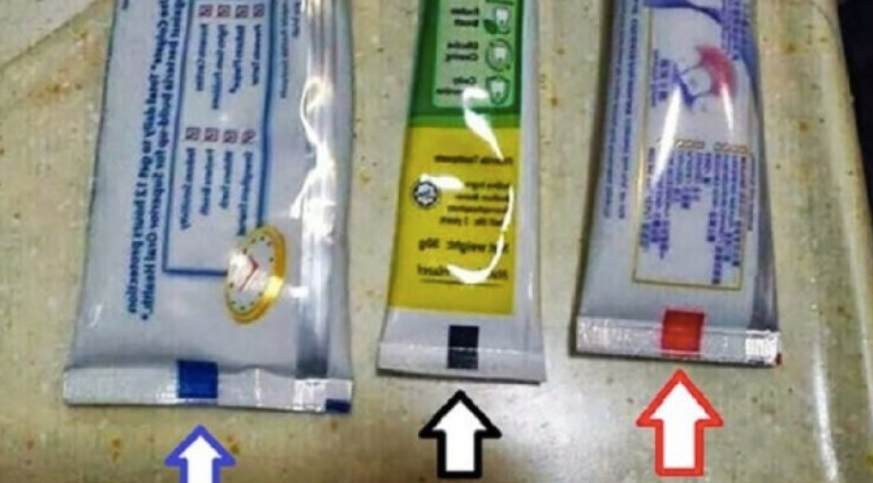
Article content
You may have noticed that on the bottom of a toothpaste tube there is a small colored square. It looks inconspicuous. Yet a number of myths and half-truths circulate around it. According to some sources, the color of the square supposedly indicates whether the toothpaste contains natural ingredients or is purely a chemical cocktail. But is that really the case?
In our editorial office we looked into this phenomenon in detail and investigated what is true about the whole theory. The results may surprise you.
The myth people believe: color means quality
Guaranteed information circulates on the internet about what each square means. According to these claims the colors symbolize:
- Green square – natural composition, no chemicals
- Blue square – a combination of natural and chemical ingredients
- Red square – predominance of chemicals, possible risky ingredients
- Black square – purely chemical product, without natural ingredients
It sounds simple. And also tempting. “Just look at the bottom of the tube and I immediately know whether my toothpaste is healthy.” The problem is that this is not true.
How is it really?
The colored squares on toothpaste tubes have no connection to the product’s composition. Their color serves purely technical purposes in the packaging production process. These marks help machines with cutting, printing, or sealing packages, and the color only indicates an optical cue for a laser or sensor.
In other words – the color of the square reveals absolutely nothing about what you are putting into your mouth.
Why is it important to know the actual composition?
If you care about health and choosing the right toothpaste, you should follow the ingredients listed in the composition (INCI), not the color of the square. Read the back label and look for, for example, these substances:
- Sodium fluoride – strengthens enamel, but can be risky if ingested
- SLS (sodium lauryl sulfate) – a foaming agent that can irritate mucous membranes
- Triclosan – an antimicrobial agent whose safety is debated
- Natural ingredients – extracts of mint, chamomile, sage, or green tea
If you want to use a natural toothpaste, look for those that have natural cosmetics certification – e.g. COSMOS, NATRUE or CPK.
What to take away?
The colored squares on toothpaste packaging act like a code for insiders, but in reality they are purely technical marks. Do not fall for myths and disinformation. Instead, pay attention to the actual composition of the cosmetic and the manufacturer’s trustworthiness.
Choose your toothpaste responsibly – not by color, but by what it actually contains.
Summary in conclusion
- The colored squares on toothpaste packaging are technical marks, not information about composition.
- The choice of toothpaste should be guided by the label and the INCI list.
- If you are looking for natural ingredients, focus on certified products.
- Do not fall for internet myths – verify information from trustworthy sources.
Was the article helpful? Share it with friends and follow more tips for a healthy lifestyle on the website iRecept.cz.


