
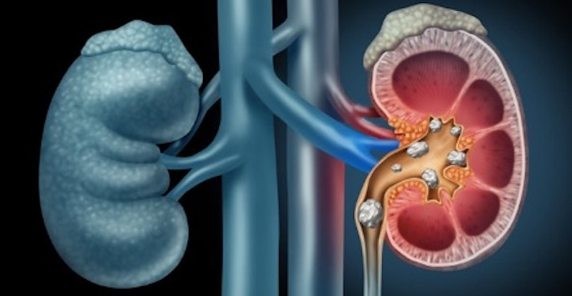
Article content
There is one commonly used medicinal plant throughout the world, and especially in Ayurvedic medicine, for various health problems.
Evidence of its strength and effectiveness in helping to treat or reduce the size of painful kidney stones is provided by a study on 60 patients.
Kidney stones and natural remedies
Kidney stones affect about 10% of people in the Western world, with annual healthcare costs — for example, in the USA alone — exceeding $2 billion.
Natural therapies for this common condition include blackcurrant, cranberries and omega-3 unsaturated fatty acids, but one plant stands out for its potential in combating kidney stones.
It is Nigella sativa (N. sativa), or also black Egyptian cumin, whose seeds have a long history of use as both food and medicine.
Sativa, which belongs to the Ranunculaceae family and is native to regions such as southern Europe and northern Africa, has a rich historical and religious background. Its seeds [iii] and the oil from them have been widely used for centuries to treat various ailments.
For example, among Muslims N. sativa is regarded as a miraculous cure for all illnesses, which has earned it an honored place in Tibb-e-Nabwi, i.e., prophetic medicine.
The effectiveness of black cumin against kidney stones
A study published in the journal Phytotherapy Research attempted to assess its effectiveness in dissolving kidney stones.
In a randomized, double-blind, placebo-controlled clinical trial, 60 patients were given either a placebo or a drug containing 500 milligrams (mg) of black cumin twice daily for 10 weeks.
The volunteers were aged 20 to 60 and had kidney stones larger than 5 millimeters (5 mm). The team assessed the size of the patients’ kidney stones before and after the study period by sonography.
They found that in the black cumin group, 44.4% of participants passed their kidney stones completely, in 3.7% the size of the stones remained unchanged, and in a remarkable 51.8% the stones decreased in size.
By contrast, in the placebo group only 15.3% completely passed their kidney stones, 11.5% experienced a reduction in stone size, and in 57.6% there was no change in stone size.
Black cumin was generally well tolerated by the study group. It significantly increased serum calcium and was found to be more effective on smaller stones, especially those with a diameter less than 7 mm. [V]
The researchers observed a significant difference between the two groups in kidney stone size, which led them to conclude that black cumin may be effective in reducing kidney stones, or even eliminating them completely.
Salt and solving the problem of kidney stones
In the search for natural solutions for kidney stones, black cumin is not the only success.
As a good option for patients with hypocitraturic nephrolithiasis (a type of kidney stone), [vi] lemonade therapy appears to be effective, while long-term supplementation with omega-3 fatty acids may contribute to the formation of calcium oxalate stones. [Vii]
Kidney stones affect 10 to 12% of the population, recur in 50% of cases, and the male-to-female ratio is 3:1. [Viii]
About 60% of these stones are calcium oxalate, 20% are calcium phosphate, and 9 to 10% are uric acid. Kidney stones increase the risk of kidney failure and obstruction and related conditions.
According to what is known, people at risk of kidney stones, or those who already have them, should preferably limit their salt intake.
For decades it has been known that salt actually reduces the risk of kidney stones in animals because it increases their water intake, which dilutes urine and thus drastically reduces the risk of kidney stone precipitation.
The same happens in humans: higher salt intake means greater fluid intake, which then leads to more dilute urine and a lower risk of forming kidney stones.
Conclusion
Your risk of kidney stones can also be affected by the consumption of fruits and vegetables, because eating fresh produce can reduce acidity in the urine and thereby lower your risk of stone formation.


