Article content
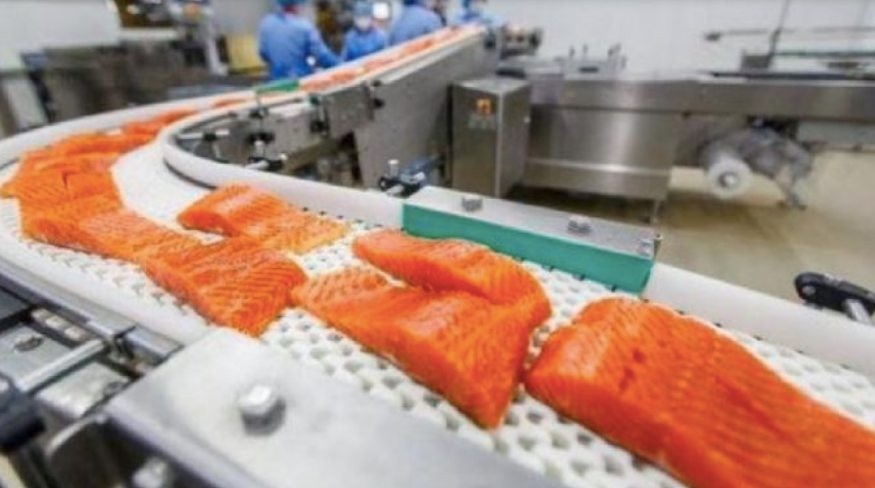
During several months French journalists Nicolas Daniel and Louis de Barbeyrac studied the fishing industry from the inside. They travelled from Norway to Vietnam, visiting Sweden and Denmark. The result of their investigation was a film that reveals the truth about Norwegian salmon, which the “fishing lobby” is trying to hide.
The investigation began on the west coast of Norway, where there are many fish farms in rural areas that are engaged in the artificial breeding of salmon.
The journalists met with Norwegian activists, ecologists and the founder of the Norwegian Society for the Protection of Nature, Kurt Oddekalv, who considers it an outrageous fact that is hidden beneath the waters of the fjords.
Kurt Oddekalv has long waged a war against the farms that artificially raise salmon in Norway. He recounted shocking details about their work.
“The situation with fish in Norway is catastrophic. There are too many fish: on a farm so small they raise up to 2 million individuals. The fish are sick; it is now possible to speak of a pandemic: pancreatic necrosis and Infectious Salmon Anemia have already swept across all of Norway, but they hide it from the public.”
Activists have been monitoring large fish farms for the last ten years, keeping them under surveillance and collecting evidence. They have records that show how fish farm workers pour a strong pesticide into the water that has neurotoxic effects.
“They themselves must wear masks and protective suits to protect against the chemicals used to treat the tanks for parasites. This is not unusual on fish farms. A whole range of chemicals that endanger humans can be found in salmon. “Kurt says directly: “Norwegian salmon is one of the most poisonous foods in the world”.
The fishing industry in Norway brings in $4 billion a year and is second only to oil. The main problem for Norwegian breeders is the so-called sea lice, which parasitize the fish’s body and can kill it. Sea lice develop resistance to any chemicals, so breeders continuously use increasingly effective pesticides.
“This has a negative effect on the fish. Up to 50% of cod on farms are born with mutations, for example they cannot close their mouths. It is a genetic mutation and for it to disappear, eight generations must survive in the sea.
If a person sees such a fish, they do not want to eat it, but if the head is cut off, no one will notice.”
Salmon is also subject to mutations, and Kurt showed us how the fresh salmon meat falls apart during cooking.
“This should not be; the meat should be elastic. As you know, wild salmon has 5 – 7% fat and farmed salmon 15 – 34% fat. All toxins accumulate in fatty tissue. As a result, this fish becomes one of the most poisonous in the world.”
French toxicologist Jerome Ryuzzen during his research confirmed Kurt Oddekalv’s words: “In fact, the degree of contamination of farmed salmon is very high. It can be up to five times more toxic and harmful than other products. These toxins must be avoided, otherwise we risk our health.”
Salmon and GMOs
Salmon could become the first genetically modified animal to be approved for human consumption. The Food and Drug Administration decided that genetically modified salmon, which grows twice as fast as its unmodified counterpart, is harmless both for consumption and for the environment.
“There is a possibility that this fish will sooner or later get into the oceans,” Brian Ellis, a plant biotechnologist at the University of British Columbia in Vancouver, told Discovery News. “I think that if we continue in this direction, we should be prepared for as-yet unknown consequences.”
Did you read the article to the end? Did it interest you? Then you can reward the editor’s work by liking the article on Facebook or by sharing it — thank you.