Article content
Look at what is claimed to be a safe food additive. It is labeled with the number E621 and is added to a large amount of not only foodstuffs, but also cooked dishes, predominantly in restaurants.
However, it can also be found in many other food products that you buy daily in the supermarket. Its main role is to enhance and intensify flavor.
What is sodium glutamate
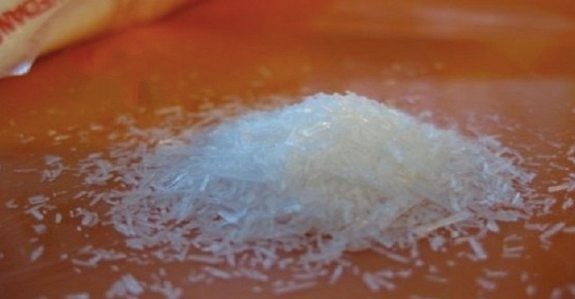
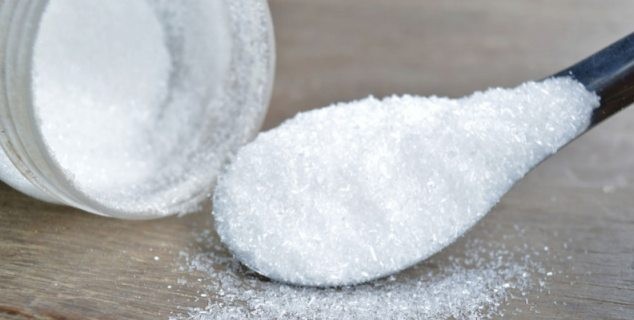
Sodium glutamate is a white crystalline substance that resembles salt or sugar and, when diluted in water, tastes similar to meat broth.
It can be added to any kind of dish.
Besides enhancing flavor, another of its properties is that it increases appetite and craving for food. It can thus contribute to the development of overweight and obesity.
It works by penetrating the bloodstream and from there reaching the brain, where it stimulates the nerve cells responsible for taste.
You can find it in various types of foods, but most commonly in the following:
- salami, sausages and other meat products
- potato chips
- packet soups
- canned foods
- beer
- many other products
The officially stated safe dose is 1.5 grams per adult per day and 0.5 grams per child per day.
Symptoms of excessive consumption of sodium glutamate
Currently up to 200 thousand tons of sodium glutamate are consumed worldwide each year.
An overdose of it is sometimes called the “Chinese restaurant syndrome”, because it is used in increased amounts mainly in Asian cuisine.
Among the manifestations of excessive consumption are, for example, the following conditions:
- dizziness, nausea and weakness
- migraines
- visual disturbances and impaired sight
- heart palpitations
- disruption of hormonal balance
- pain or pressure in the chest
It was originally discovered in 1907 in Japan by a man named Ikeda Kikunae.
Through various experiments he managed to discover a compound that could enhance the taste of foods, especially the taste and aroma of canned products, fast food, and frozen products.
However, today it is no longer popular only in Asia; it has gradually found its way into the food industry of Western countries as well.
Experiments with glutamate on mice
When experiments with sodium glutamate were performed on mice, after some time of its consumption they lost their sight.
One of its other negative properties is that it gradually dulls the taste buds on the tongue and it is necessary to increase the dose to achieve the same effect.
It is also the main reason why you may find some food very tasty and cannot stop eating it. This mainly concerns potato chips, snacks or soups from cans or sachets.
Their frequent consumption can even cause addiction, where you subconsciously prefer such foods that contain it.
Conclusion
Don’t forget that food producers profit from adding E621 to products because it lowers their production costs and masks the low quality and taste of the foods.
When buying food in the supermarket, but also in restaurants, beware of this substance.
Always read the product’s ingredients on the label, or ask whether your restaurant uses it in meal preparation.
This way you will avoid a whole range of possible consequences from addiction to several serious illnesses.