
Article content
Can a virus in the 21st century kill millions of people, like the “Spanish flu” in 1919? How does the new strain differ from previously known ones? Who is at risk and how to protect oneself?
The questions were answered by a professor of the medical faculty of London’s Imperial College, Robin Shattok.
BBC: What is the difference between the coronavirus and SARS, which killed 813 people in 2003?
Robin Shattock: In the case of the SARS virus, people first showed symptoms of illness and then became contagious. With the current coronavirus, although this requires further study, people can be infected yet still show no symptoms for several days. However, they may already be contagious.
If this is true, it will be more difficult to control the spread of the virus, because it is hard to identify infected people who show no symptoms, for example by measuring temperature. They look quite healthy, do not need to visit a doctor, interact freely with others, but at the same time can contribute to the rapid spread of the infection.
BBC: Who is in danger?
R.Sh.: Older people and those who suffer from respiratory illnesses are most at risk of severe disease. For healthy people this virus is not a big problem.
BBC: Does that mean, for example, that if a person is 30 years old and leads a healthy lifestyle, they can still become infected but not die?
R.Sh.: Of course we cannot guarantee anything, but it seems that the vast majority of young people exhibit symptoms in a mild form, which does not differ much from severe flu.
BBC: How to protect oneself from this virus if a person is in a city where the disease is already spreading?
R.Sh.: The best way to protect against the virus is with conventional hygiene products. Wash your hands more often – because the virus can be transmitted not only by airborne droplets when someone sneezes or coughs, you can pick it up by touching infected surfaces or infected people. Wash your hands regularly.
BBC: Do masks help?
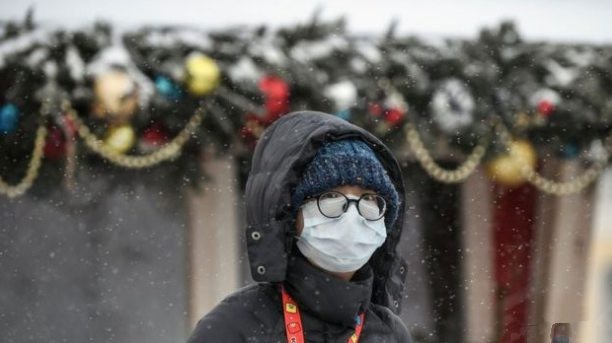
R.Sh.: A mask has some protective properties, but in reality it doesn’t help. In addition, there are viruses on the hands with which people touch their faces, put on and remove these masks, so there is no need to talk about their effectiveness.
BBC: What can states do to prevent the spread of the virus?

R.Sh.: It is very difficult for one country to protect itself from viruses, given the global movement of people. If an epidemic has begun, new cases of infection will be recorded in different parts of the world.
What they do by quarantining entire cities and limiting movement should slow the spread of the virus. If these measures are effective, they will slow its spread, but we will still witness a global epidemic.
We know that the original carriers of the virus were bats, which could have been an intermediate host, rodents or another species. And the wet market in Wuhan became the place where the virus was transmitted from animal to human.
We believe that in the future it will be very difficult to prevent the transfer of viruses from animals to humans, because it happens regularly and similarly, and because the more people live close to animals on the planet, the population density itself increases this probability .
BBC: One of the deadliest viruses of the 20th century is the so-called Spanish flu. The epidemic claimed tens of millions of lives. Could an equally deadly virus appear in the 21st century?
R.SH.: At this stage we do not expect this virus to be as deadly as the Spanish flu.
Today we have a much more developed healthcare system, we have access to clean oxygen, to antibiotics, we are better prepared for such scenarios. Nevertheless, there is no doubt that sooner or later a new influenza pandemic will occur.
BBC: The internet is discussing that this virus could have been created artificially. Is that possible?
R.Sh.: Definitely not! Because we were able to find the source virus in bats. That means it existed before and then passed to humans. The detective story is solved, if you like. This virus was not artificially created in a laboratory; it is simply an interspecies transfer.
BBC: How will a vaccine help against the virus?
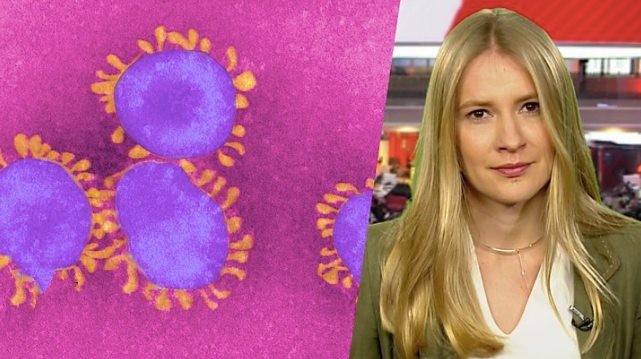
R.Sh.: When we introduce the virus, we talk about the fact that the viral particle carries genetic information – the virion. Protein spikes are located on the surface of the virus, by which it binds to the body’s cells and causes infection.
In developing a vaccine we take this RNA strand and determine which part is responsible for encoding the protein spikes. Then we take this specific part of the strand and make a vaccine in which the virus is expressed only by this guiding protein. The human immune system must react to this part of the virus by producing antibodies that bind to this protein.
So if this virus reaches a person who has already developed antibodies, it is blocked and prevented from entering target cells. That means the person is not infected.


