
Article content
Heart disease is the main cause of death. This applies to both men and women.
Every year about 90 thousand people in Slovakia have their first heart attack. Another 40 thousand survive their second, third, or subsequent heart attack.
Diet plays the primary role in heart disease and, of course, physical activity and stress also play their part.
Research shows that these last two factors can significantly reduce your risk of disease.
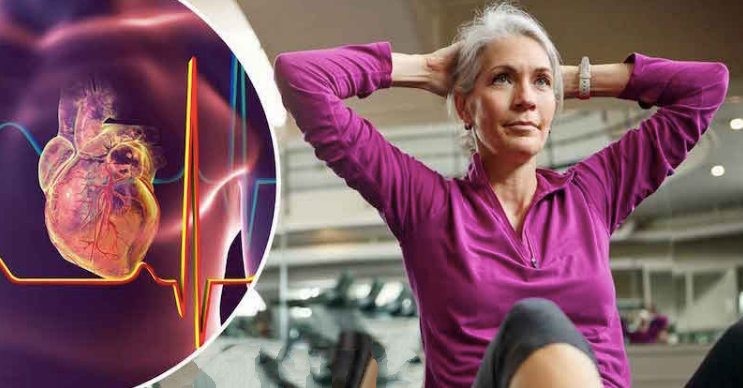
Moreover, exercise is a double weapon, because besides improving cardiovascular health it also excellently relieves stress.
How physical activity reduces the risk of heart failure
A study1 published in 2015 concluded that there is an inverse relationship between physical activity and risk of heart failure, and that even moderate-intensity exercise is sufficient.
Exercise significantly helps the heart and blood vessels even if you start it later in life. So it is never too late to begin.
On average, people doing 150 minutes of moderate exercise or 75 minutes of vigorous exercise per week had up to a 33% lower risk of heart attack compared to inactive people.
For shorter durations than those mentioned above, there was still a significant risk reduction, about 20%.
Even simple walking brings benefit. People who walked just 30 minutes a week had a 12% lower risk of heart failure.
Another scientific study2 from 2013 examined the difference between taking medications and physical activity. It found that physical activity had the same effectiveness in preventing heart attacks as drugs.
It is a reminder of how effective movement can be.
Exercise after a heart attack — yes or no?
Many patients who have had a heart attack fear that increased exertion will overwhelm their heart. In the past it was believed that exercise could trigger another heart attack, so doctors recommended rest.
In the 1960s a complete 6-week bed rest was even prescribed after an infarction.
Since then much has changed. The latest research3 from 2018 presented by the European Society of Cardiology showed that physical activity actually reduces the risk of death during the 4 years after a heart attack by up to half.
As Dr. Örjan Ekblom, a Swedish professor at the Faculty of Sport and Health Sciences in Stockholm, states:
“We followed over 22 thousand patients, of whom 1087 died within 4 years after the heart attack. We divided them into groups by age, sex and other clinical factors.
We found that compared to patients without physical activity, patients with a small amount of physical activity had a 37% lower risk of death, patients with increased activity 51% lower, and regularly active patients up to 59% lower.”
According to the professor, their study confirmed that exercising after a heart attack actually reduces mortality risk and does not increase it as previously assumed.
He therefore believes that exercise should be part of every prescribed treatment plan, just like recommendations to stop smoking, improve diet, or reduce stress.
Professor Ekblom further states that this applies to all cases of heart attacks — both small and large.
How soon after a heart attack to start exercising?
The question arises how soon after surviving a heart attack one should begin exercising.
In the above-mentioned study, researchers asked patients whether they exercised at least 30 minutes a day previously, and then at week 6, week 10, and again after 1 year.
The results showed that it is good to start exercising fairly early — already in the 4th to 5th week after the heart attack.
Does blood cholesterol increase the risk of a heart attack?
Conventional medicine still focuses on the idea that cholesterol creates deposits in the vessels and clogs arteries. Recent evidence, however, says that this theory has serious shortcomings.
Current research, on the contrary, claims that higher cholesterol levels actually prolong life and that there is no link between high cholesterol and deaths.
As Dr. Giorgio Baroldi states in his book on the etiopathogenesis of coronary heart disease4:
“Only 41 patients who suffered an infarction had blocked arteries and 50% vessel blockage occurs only after the infarction, not before it.
From this it follows that at least 80 cases of infarction are not related to clogged arteries at all.”
So what then causes infarctions?
3 main factors that trigger a heart attack
According to Dr. Cowan there are 3 main factors leading to a heart attack:
1. Imbalance in the autonomic nervous system
This is mainly chronically suppressed activity of the parasympathetic nervous system (the body’s “rest and digest” function).
This function is mainly suppressed by factors such as stress, lack of sleep, high blood pressure, diabetes, high blood sugar and smoking.
All these things have a significantly harmful effect on the function of cellular mitochondria.
2. Poor microcirculation of blood in the heart
It is a common belief that blood flows to the heart only through the coronary arteries. However, that is not true.
In fact the heart has many smaller vessels and capillaries that bring it nutrients and oxygen.
If one or more major vessels become blocked, your body will automatically begin to form new vessels to compensate for the reduced blood supply to the heart.
In other words, the body begins to create its own bypass.
According to Cowan, your body is perfectly capable of supplying the heart with nutrients if your capillary network is intact. Then you are protected from infarction.
However the same factors that cause suppression of the parasympathetic nervous system (stress, lack of sleep, smoking, high blood sugar and chronic inflammation) also cause loss of microcirculation.
And one of the best ways to support this microcirculation of the heart is physical activity. After heart attacks this becomes even more important to adequately restore the heart’s blood supply.
3. Accumulation of lactic acid due to damaged mitochondrial function
Poor mitochondrial function causes accumulation of lactic acid, which triggers pain and muscle cramps.
If this happens in the heart, we call it angina pectoris.
The problem is that accumulated lactic acid blocks blood flow to the heart and causes tissue toxicity.
When a calf muscle cramps you stop moving it and then lactic acid gradually dissipates from it. The heart, however, cannot stop and so lactic acid continues to accumulate in it.
Eventually this causes failure of calcium supply to the heart muscle, which then prevents its contraction. In other words, the heart has trouble maintaining its beat.
Continuing acidosis increasingly damages heart tissue until an infarction finally occurs.
Another risk factor for infarction that mainly concerns women
There is one relatively rare trigger of heart attack that mostly affects young and healthy women.
It is so-called spontaneous coronary artery dissection5 (SCAD), which is very easy to overlook. Few patients have a history or risk factors for this condition.
It is the main cause of death from heart disease in women under 55. The average age is only 42.
SCAD occurs when the layers of the blood vessel wall separate and blood becomes trapped in the resulting space. The vessels swell, block blood flow and subsequently heart tissue dies. The end result is a heart attack.
The causes of SCAD are still unknown, but medical experts theorize that it has something to do with hormones.
General risk factors for SCAD are:
- female sex (80% of patients are women)
- recent childbirth (20% of patients are shortly after delivery)
- other vascular diseases, for example fibromuscular dysplasia (abnormal cell growth inside arteries)
- extreme physical exercise
- severe emotional stress
Typical symptoms of an infarction include light sensitivity, sweating, pain radiating from the neck, back or jaw, and shortness of breath.
Patients often also report chest pain and pressure (as if a bra suddenly became too tight), stomach pain, fatigue and pain radiating down both arms.
The problem is that this disease affects otherwise healthy women. Therefore it is important to seek medical help immediately if any of the above symptoms suddenly appear.
You can watch the following video about SCAD (in English):
Strategies to prevent heart attack
So what can you do to avoid the causes leading to a heart attack? In the final part of this article we offer a few effective prevention strategies.
These strategies are mainly aimed at preventing accumulation of lactic acid in the heart, improving microcirculation and restoring balance in your parasympathetic nervous system.
1. Eat a ketogenic diet
Such a diet includes whole unprocessed foods with a low proportion of carbohydrates and a high proportion of healthy fats. They are excellent for optimizing mitochondria.
Also include foods like beetroot juice (to optimize blood pressure) or fresh arugula.
2. Be active
Get plenty of movement that is not considered exercise, such as walking or taking the stairs.
In addition, incorporate some moderate-intensity exercise into your daily schedule in the time volume mentioned earlier in our article.
3. Intermittent fasting
At least a few days a month fast for 20 hours.
If you can manage it, later add 4 to 5 day-long fasts of only water several times a year.
4. Enhanced External Counterpulsation (EECP)
If you already have some heart disease, consider an EECP procedure. It is a highly effective and non-invasive treatment method that improves microcirculation of the heart and relieves up to 80% of cardiac angina.
It is clearly the best way to repair already existing heart damage.
In this method cuffs around the thighs are inflated in synchronization with your ECG. When your heart is in diastole (relaxed), the balloons inflate and push blood toward the heart, prompting the formation of new capillaries in it.
For most people it is a really safe and very effective therapy, an alternative to coronary bypass surgery.
Instead of bypassing one or two arteries, you create thousands of new capillaries that will bring even more blood to the heart than the arteries would have.
One session lasts about an hour and most patients will need around 35 sessions.
In addition to angina, it is effective for heart failure and diastolic dysfunction. Even otherwise healthy athletes use this therapy to maintain cardiac capacity during injuries when they cannot train.
It can be said that EECP functions as a kind of passive form of exercise.
5. G-strophanthins
G-strophanthins are adrenal hormones that help stabilize neurotransmitters of the parasympathetic nervous system, thereby supporting this system.
They also help remove lactic acid from the body.
You can find them for example in the plant strophanthus, whose active substance is the mentioned g-strophanthins. It may be difficult to obtain, try searching online.
6. Optimize your vitamin D levels
The simplest way to obtain vitamin D is to spend enough time in the sun.
In winter it is necessary to supply vitamin D to the body in the form of supplements.
7. Optimize your magnesium levels
Magnesium deficiency affects many of your metabolic functions, including mitochondrial activity.
In addition, magnesium helps relax tension in blood vessels and normalizes blood pressure, which is often a significant factor in heart attacks. Many cardiovascular diseases, including arrhythmia and sudden cardiac failure, are associated with magnesium deficiency.
The best approach is to have an RBC test done, which measures the amount of magnesium in your red blood cells. Also check for signs of magnesium deficiency listed in this article.
Eat foods rich in magnesium and take supplements that, besides magnesium, contain vitamin D3 and K2, which support its absorption.
Also monitor your potassium and calcium levels, as they are significantly linked with magnesium.
8. Practice gratitude
This is a somewhat unconventional recommendation, but psychological factors are an important element in heart disease.
Practice gratitude for example by spending more time with your loved ones or by engaging in charitable activities.


