Article content
The task of state inspection authorities is to protect the public, but that is not always the case. Be cautious when buying food!
From today on, rather read the ingredients of products on their packaging carefully. Many popular foods do contain approved ingredients, but they can still be dangerous to your health.
Here are 9 foods and their ingredients that you should avoid next time just to be safe:
1. BVO in citrus soft drinks
BVO is the abbreviation for Brominated vegetable oil.
It is a food additive used to prevent citrus flavors in drinks from separating. Today the use of this additive is permitted under certain conditions.
The problem, however, is that many studies have shown how bromine can gradually accumulate in the body and later cause memory lapses, skin problems, or nervous system disorders.
2. Titanium dioxide in low-fat milk and a number of other foods and medicines
Titanium dioxide is the same substance used to make paints, plastics, and other chemicals white.
It is therefore often added to low-fat milk and is even found in many medicines or vitamin preparations sold in pharmacies.
Normally skimmed milk has a bluish tint, which is not very appealing. Therefore titanium dioxide is often added to make it white again. Moreover, it is not even listed on the packaging because it is considered not an ingredient but a substance used in production.
The International Agency for Research on Cancer (IRAC) considers titanium dioxide a possible carcinogen.
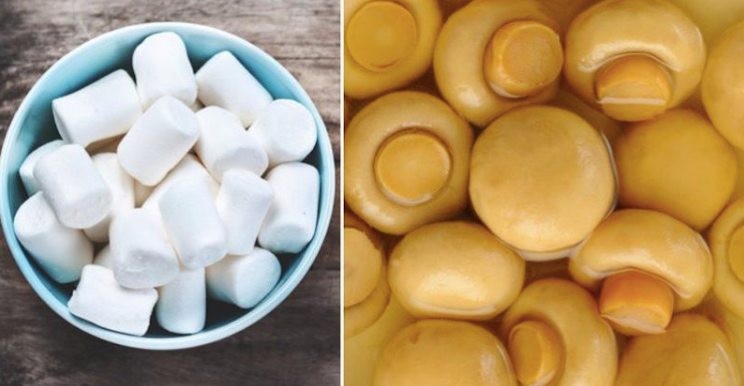
3. Caterpillars and beetles in canned mushrooms
Canned foods often contain beetles and caterpillars because a factory during production cannot guarantee that all foreign organisms will be removed. There is therefore a high probability that beetles and caterpillars will be processed and cooked together with the food.
For example, the U.S. Food and Drug Administration (FDA) allows up to 100 caterpillars per 100 grams of canned mushrooms.
If you want to avoid this, rather do not eat canned foods from the store, especially canned mushrooms.
4. Lanolin in chewing gum
Lanolin is a wax from wool. It is a substance produced by some animals, for example sheep, and is used in foods as a softening agent.
It usually forms part of the base of chewing gum.
In addition, it is also used in cosmetics, skin care products and hair cosmetics. Lanolin has undesirable effects on the human body.
5. Wood pulp in sliced cheeses
Cellulose, also called wood pulp, is added to processed cheeses to prevent them from sticking together. On the packaging it is often labeled as “added fiber”.
Cellulose is an approved additive for food, and its permitted content is up to 4%.
However, if you prefer to consume real fiber and not wood material, choose foods that do not contain it.
6. Artificial sweeteners
The best known artificial sweetener is aspartame and it is found in a huge number of foods — from chewing gum and diet soft drinks to medicines and vitamin supplements.
In the scientific literature, aspartame consumption is linked to many illnesses:
- brain tumors
- diabetes
- multiple sclerosis
- Parkinson’s and Alzheimer’s disease
- fibromyalgia
- chronic fatigue
It can also cause depression, panic attacks, headaches, nausea, mental confusion, migraines or seizures.
You can most often find it in “sugar-free” foods such as diet soft drinks, gelatin, desserts, chewing gum, fruit juices, puddings and many other foods.
7. High-fructose corn syrup
High-fructose corn syrup is found in almost all processed foods, especially the cheap ones, because it is cheaper than sugar and many manufacturers use it instead.
It is also added to baked goods, candies, flavored yogurts, salad dressings, canned foods, cereals and many more.
High-fructose corn syrup contributes to weight gain, increases bad LDL cholesterol, damages tissues and has a toxic effect on the liver. It also contributes to the development of diabetes.
8. Trans fats
Despite their high harmfulness, trans fats are still added to many foods to extend their shelf life.
You can mainly find them in margarine, potato chips, cookies, biscuits, baked goods and fast food.
Many studies have shown that trans fats increase levels of bad LDL cholesterol and decrease levels of good HDL cholesterol in the blood. They also increase the risk of heart attack, stroke, inflammation, diabetes and other health problems.
In Europe, foods exceeding 2% trans fat content are banned. However, frequent consumption of foods with lower amounts of these fats can still seriously harm your health.
9. Common food colorings
Studies have shown that artificial colorings in soft drinks, fruit juices and salad dressings can lower IQ in children and also cause behavioral problems.
Blue dye (E133) is already banned in many countries — for example in Norway, Finland and France. However, it still appears in many candies, cereals and drinks. It can cause chromosomal damage.
Red dye (E124) causes thyroid cancer and chromosomal damage. You can find it, for example, in cocktails, preserved cherries used on cakes and desserts, ice creams and other foods.
Yellow dye (E110) increases the risk of kidney tumors. It can be found in some types of cheeses, macaroni, soft drinks, candies and other products.
Conclusion
Watch what you eat and avoid the food ingredients listed in this article whenever possible. Remember to check the ingredient list on food packaging.
If you find one or more of the mentioned things there, rather return such a product to the shelf and choose a healthier alternative without harmful ingredients instead.