Article content
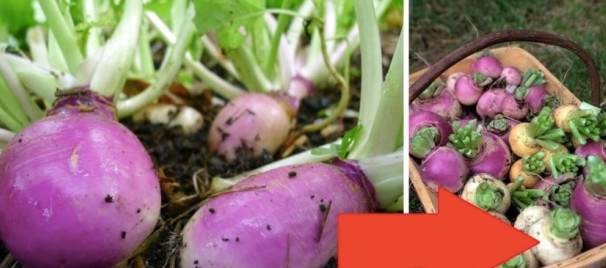
Turnips or turnip varieties belong to the mustard family. Our great-great-grandparents already knew it as a hardy crop that can be grown even in more demanding conditions, for example at higher altitudes and in colder places. In the Middle Ages this vegetable was very widespread in Europe where it formed one of the staple foods. It was also very popular because the crop could be harvested twice a year – in autumn and before summer. Its bulbs store well even in the winter months. From the young leaves we can prepare a tasty salad.
In taste it can resemble a radish or kohlrabi . Unlike the radish it does not sting at all, it is juicy and has a mild buttery taste.
Sowing and care
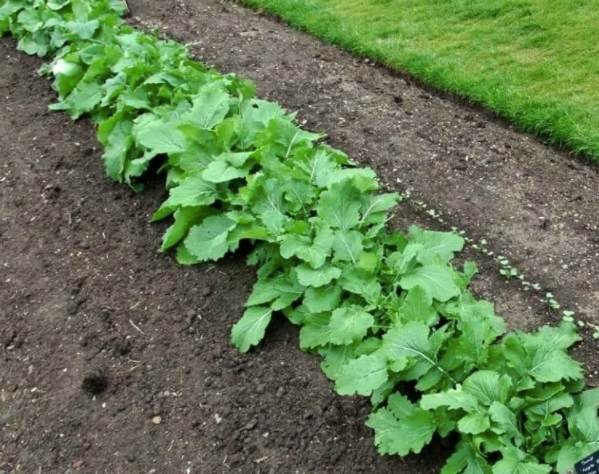
The growing period of this vegetable is very short – 7 to 10 weeks , so you can sow it twice a year. For winter storage it is recommended to sow it in August. If you sow it in the second half of March, you will be harvesting already in May . Turnips should be sown into moist soil in a light to sunny position. At later sowing dates a semi-shaded spot is also acceptable. The sowing depth should be 2 to 3 cm and the plant spacing about 20 to 30 x 10 cm.
This vegetable is not demanding to grow . It is enough to keep the soil around it loose and in case of warm and dry days give it a watering.
Turnip for health, what can it do?
- high content of vitamins and nutrients,
- its high calcium content makes it an aid in treating fractures and preventing osteoporosis ,
- high content of plant sterols, which are a good prevention against arteriosclerosis ,
- rich in antioxidants, which remove harmful free radicals from the body,
- strengthens immunity ,
- helps with weight loss ,
- improves and speeds up digestion and stimulates intestinal activity,
- cancer prevention (this is due to the high antioxidant content and positive effect on the function of the digestive tract and intestines),
- cardiovascular health – improves vessel flexibility, helps remove calcareous deposits and thus improves their patency,
- diuretic effects – frequent consumption can even help dissolve small kidney stones,
- anti-inflammatory properties are effective in treating asthma and suppressing asthma symptoms,
- turnip leaves are a rich source of lutein, a carotenoid, which supports eye health and prevents eye diseases such as macular degeneration and cataracts,
- slowing aging – the antioxidants in turnips have the ability to fight free radicals, prevent cell damage and slow aging.
Turnips can be used in various ways . They can be eaten raw like a radish or cooked in the form of a salad, puree or stewed. The leaves can also be eaten; they are full of vitamins, nutrients and excellent for example in salads,
Excellent for weight loss
Turnip is composed of 91% water. The rest consists of 0.3% protein, 6.1% non-nitrogenous extractive substances, 1.1% fiber and 0.8% ash with the largest share of potassium.
This composition already suggests that it is very healthy, light and suitable even for reduction diets. Chop it into soup instead of potatoes, prepare it as a purée, or bake it – it is very tasty and delicious.
Turnip is unsuitable for people with gallbladder inflammation.