
Article content
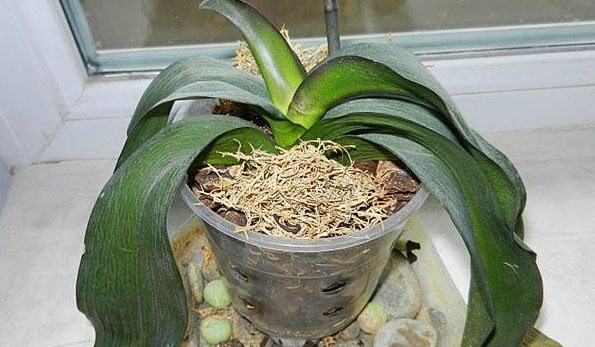
An orchid requires more care than other flowers and sometimes reacts very sensitively if it doesn’t like the conditions you are growing it in. Proper watering is especially important. The overall health of your plant depends on it. One of the most common problems you may encounter with orchids is leaf wilting. A healthy orchid has beautiful firm green leaves that shine and look fresh. However, if you notice that the leaves have started to wilt, lose their elasticity and resemble drooping fabric in appearance, it is essential to address the problem as soon as possible.
There are several factors that cause the plant to lose moisture and the leaves to wilt. However, the most common causes are:
- excessively dry soil
- root system decay
- excessive fertilization
- too high room temperature
- a pot that is too tight
If only a few lower leaves have wilted and dried, you do not need to be concerned. This is a natural process. The orchid sheds old leaves and uses the moisture for new ones. However, if all the leaves are wilting, try taking the following steps to save it.
To help your plant, you must first correctly identify the problem and determine its cause.
Excessively dry soil
If the soil is too dry, you need to return moisture to the plant. You can use a spray bottle to moisten the leaves. Most importantly, you should moisten the soil, so definitely try this simple lifesaver. Add 1 teaspoon of sugar to one liter of water, stir, and immerse the orchid’s pot in this solution for about 9 hours. Then remove it and place it in standing water for another hour. Don’t hesitate to add a teaspoon of sugar to the water now and then. Especially before and during flowering.
Root system decay
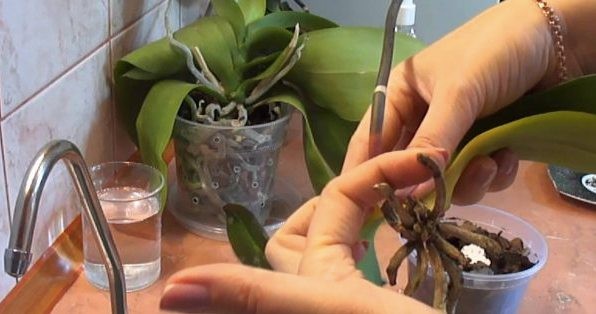
If the orchid had sufficient moisture but its leaves are still wilted, it may be due to root system decay. In that case it will be necessary to carefully remove the plant from the pot, cut away rotten roots and transfer it into fresh substrate. It is not necessary to trim all the roots if some are healthy. Remove only the damaged ones, which are easy to spot because they are either soft or dry.
Excessive fertilization
An orchid does not need to be fertilized too often. It is enough to start fertilizing in the fall and over the winter, or when a new spike appears. In summer plain water is sufficient.
It is ideal to use an organic fertilizer that you make at home.
We will need:
- peelings from approximately 3–6 potatoes
- 1 liter of water.
The water you create this way is full of minerals and nutrients in an easily absorbable form that will give your plants an immediate boost for growth and flowering.
Procedure:
- Peel the potatoes and cut the peels into smaller pieces.
- Place them on the heat, bring to a boil and let them boil.
- Then let them cool covered and strain.
- Use the water for watering every 15 days. Only a little of this elixir is needed for each pot.
- The liquid can be stored in the refrigerator for 15–20 days.
Too high room temperature
Leaf wilting can also be caused by too high a room temperature. Keep this in mind especially in the summer months. The optimal temperature is 25 degrees Celsius. However, if the orchid is directly on the window near the glass in summer, the leaves often wilt due to overheating. It should be moved to a cooler spot.
A pot that is too tight
If you notice that your orchid’s roots are too cramped and already protrude out of the pot, it is high time to repot it into a larger one. Repot it only when it is not flowering! An orchid should be repotted regularly, about every 2 years. It is not necessary for the pot to be transparent. The advantage of a translucent pot, however, is that photosynthesis occurs directly in the roots.


