Article content
A clogged drain in the kitchen or bathroom can cause major inconveniences. However, it is definitely not appropriate to postpone this problem, because the level of buildup will gradually increase to the point where common methods will no longer help.
No chemicals and a quickly restored flow
If you are currently dealing with a clogged drain and don’t have any store-bought chemicals, we’ll show you how to solve this problem at home. In fact, you don’t need aggressive chemicals to free a drain; common ingredients you use in the kitchen every day are enough. Store-bought chemical products are effective, but handling them can be dangerous and can cause unpleasant allergies, eye irritation, or breathing problems. You’ve surely heard of cases where these agents also damaged the pipes themselves (this threat is especially relevant in the case of older plumbing).
For effective and quick unclogging of the drain, you need only 3 common ingredients:
- Boiling water (4 cups)
- Baking soda (2 cups)
- Vinegar (1 cup)
How to do it?
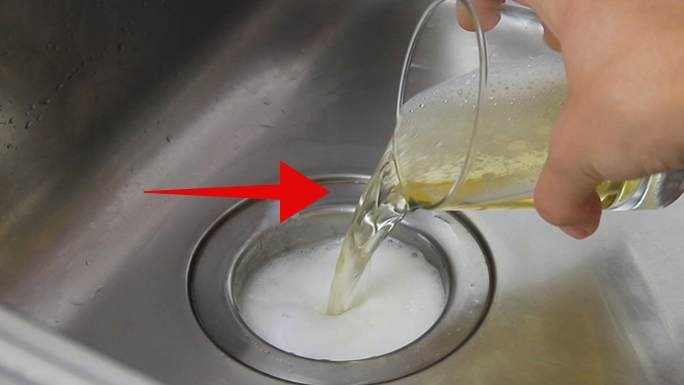
- It’s really very simple. First pour 1 cup of baking soda into the drain and pour boiling water over it.
- Let it sit for a few minutes and then add the remaining soda together with the vinegar.
- Then cover the drain with a plug so that the mixture reacts mainly inside and not on the surface. Let it work for 5-10 minutes.
- Finally, rinse the drain with boiling water. Now the drain should empty without problems.
In case of a more severe clog, it will be necessary to repeat the procedure.
Why does it work?
When sodium bicarbonate (baking soda) comes into contact with vinegar, a chemical reaction occurs that can loosen dirt, deposits, and sludge inside the pipe. When boiling water is added to this action, we create a mixture capable of dissolving grease, fat, and other debris, which are most often the causes of clogged pipes.