Article content
Plums – dried fruit or a fresh fruit that we can obtain and grow in various varieties. Currently, during the winter and spring months we can enjoy them especially in dried form – you have no idea how beneficial that is.
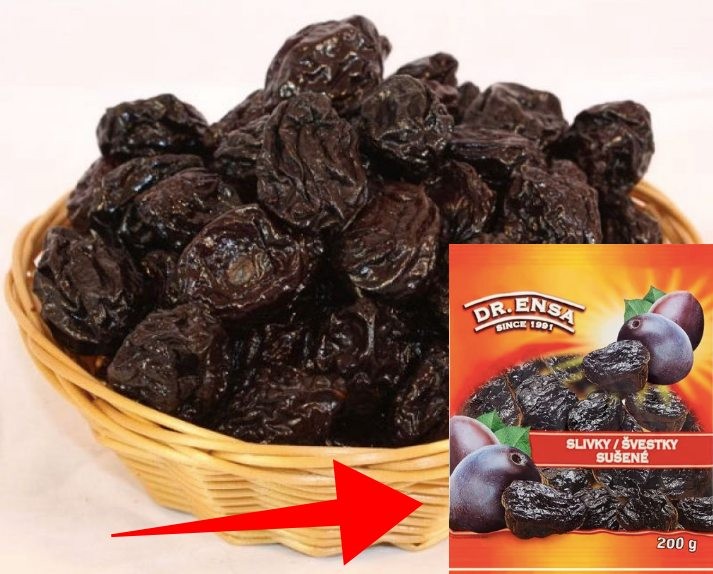
High-quality dried fruits should be soft, pliable, not overly dried.
When properly dried, about 250 grams of dried fruit are obtained from one kilogram of fresh plums.
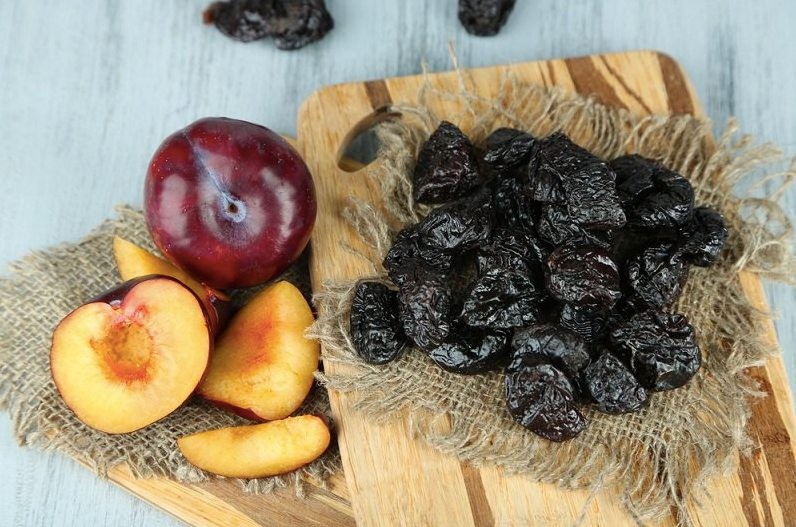
Dried plums are excellent, for example, for making homemade sweets (like “dried plums in chocolate”), desserts, salads, meats, vegetables, hot dishes, as fillings for pies and compotes. But that’s far from all. The power of plums lies in what they represent for our health. Women before and during menopause should pay particular attention.
Fresh plums are great, but…
Dried plums represent the best of plums in a “concentrated” form. To achieve approximately the same amount of nutrients and vitamins, you would have to consume more than half a kilogram of fresh plums. It can also happen that if you taste less ripe fruit, it will literally make your tongue and whole mouth bitter. The taste is astringent and each bite is hard to swallow. This unpleasant sensation is caused by tannin, which is not only unpleasant to the taste but can also cause stomach irritation. You completely avoid this by consuming dried plums.
Benefits of plums for our body
The concentration of vitamins, minerals and fiber in dried plums is significantly higher than in fresh plums. The dried product is therefore much more readily usable for our health.
Plums are incredibly important for all systems of the human body. Nutrition experts often recommend them as a natural laxative, as well as to improve bile flow and gastric juice secretion. They are also indispensable as an aid for weight loss.
If you eat 5 plums a day, you can forget about digestive tract diseases and it will also help people suffering from overweight. Besides the digestive tract, it is also important to recognize the uses of plums for other systems and organs of the human body.
Help for women over 40
Women during menopause go through several bodily changes and one of the most serious is the loss of bone mass known as osteoporosis. Research at Florida State University demonstrated that not milk, nor dairy products, but dried plums can reverse bone loss. The study was tested on women during menopause and the results were clear. Women who consumed 100 g of dried plums daily for 11 months had demonstrably more bone mass than those who used other products. Dr. Bahram Arjmandi even stated that other types of fruit and commonly available foods do not match the effects of dried plums on bones. Besides bones, plum consumption was also associated with better digestion, weight loss and lower cholesterol – these are further problems that affect women during menopause very significantly.
Plums = healthy bones
Most importantly, the substances that plums contain reach the immune system within 30 minutes and can therefore strengthen it more than any artificial vitamins or bio-stimulants. Polyphenols also reach bone tissues and act as protection not only against wear but also against inflammatory diseases of the joints and bones.
They help with constipation
Dried plums are from the category of mild but very effective laxatives. If you have problems with constipation, eat 3 dried plums before each meal, which you let soak for a while in hot water.
For the heart
Polyphenols, potassium and other nutrients contained in plums support the health and elasticity of blood vessel walls, strengthen the heart muscle, and normalize heart rate. People who regularly consume these dried fruits significantly reduce the risk of developing heart disease.
For the kidneys
Dried plums have a diuretic effect, help cope with severe swelling, improve kidney functions, and support the removal of toxins from the body.
For the eyes
Dried plums are very rich in vitamin A, which has a positive effect on vision. Therefore they are recommended for people who spend a lot of time at the computer or before a surgical procedure.
For immunity
Dried plums = a rich source of nutrients. People who eat 3-4 dried plums daily have a lower probability of developing diseases related to vitamin deficiencies. Moreover, they will help ensure that illnesses like the flu or tonsillitis will not affect you.
What can dried plums do?
- fight constipation, care for intestinal health,
- lower blood cholesterol,
- dissolve excess fatty tissue, cleanse the body,
- the pigment that plums contain is five times stronger than beta-carotene, fifty times more effective than vitamin E, and they contain ten times more vitamin C than a lemon,
- restore liver cells,
- promote kidney health,
- fight anemia,
- improve memory,
- slow down the aging process,
- fight inflammation,
- prevent diabetes,
- alleviate symptoms of premenstrual syndrome and menstrual cramps,
- speed up wound healing.
It was said that when a plum tree bore fruit, it was a sign of divine favor and a gift of health for the whole family. People valued the fruits and carefully preserved them for the whole year. They knew that in years rich in plums they somehow felt better and health ailments avoided them.
Composition of plums: vitamins and minerals
The vitamin composition of plums is so rich that it would be a sin not to include them in your diet!
100 g of dried plums:
- A, retinol and equivalent compounds – 38,713 mcg
- B5, pantothenate 0,419 mg
- C, ascorbic acid 0,577 mg
- B1, thiamine 0,049 mg
- B6, pyridoxine 0,203 mg
- E, alpha-tocopherol – 0,427 mg
- B2, riboflavin – 0,184 mg
- PP, nicotinic acid – 1,879 mg
- B9, folic acid – 3,904 ug
- B4, choline 10,093 mg
In addition, useful compounds have been found in dried plums, such as phylloquinone (vitamin K content: 59,494 micrograms per 100 g of product) and betaine (0,399 mg per 100 g).
- Phosphorus 68,773 mg
- Magnesium – 40,836 mg
- Potassium – 731,294 mg
- Sodium 1,444 mg
- Calcium 42,106 mg
- Fluoride – 3,966 micrograms
Note: do not exceed the daily dose of 100 g of dried plums