
Article content
When you have your own garden, you surely want to enjoy it in every way during the season. In today’s article you will learn how easily and cheaply you can improve your garden using ordinary vinegar. And not just against weeds.
All you need is plain vinegar. You will be pleasantly surprised by the results that can be achieved with ordinary vinegar.
Make your plants happy
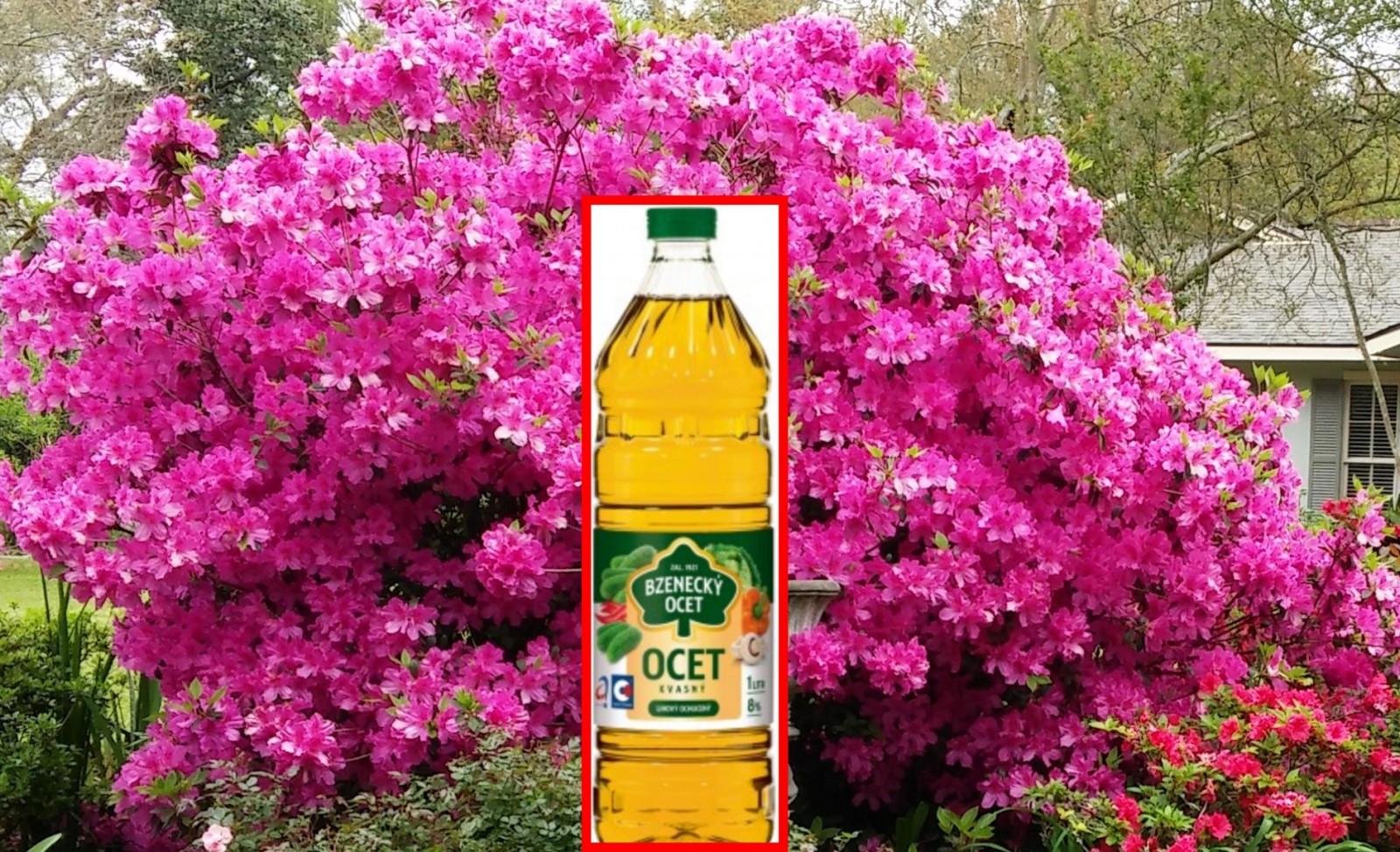
Plants that like acidic conditions will be beautiful and strong thanks to vinegar. Acid-loving plants, such as rhododendrons, hydrangeas, gardenias, or azaleas, keep in good condition using vinegar.

Although its effect is temporary, you can give plants a quick dose of acidity with vinegar. Mix a cup of white vinegar with 4 liters of water and water the plants with this solution.
Eliminates slugs
Of the many uses of vinegar, this is the most popular among gardeners. You can neutralize snails in a simple way. Just mix vinegar with water and spray the mixture on affected areas in the garden. Slugs will leave your garden alone.
Damaged woody plants can be saved
Simply cut away the affected bark and rub the wound with crushed sage leaves, which act as a disinfectant. You can just as successfully use ordinary vinegar for disinfection.
Repels snakes from your property
Does the word “snake” send a chill down your spine? We have a simple solution for you — vinegar. Because it has a strong smell, snakes can detect it from a distance, and this will reliably get them away from the vicinity of your property. The best way to apply it is to spray a solution of white vinegar around the perimeter of your garden and into cracks and places where snakes might linger.
Cleans clay flower pots
Clay flower pots develop an unattractive appearance over time due to salts, lime, and minerals. A twenty to thirty minute bath of the pots in a vinegar and water solution at a ratio of 1:3 (1 part vinegar to 3 parts water) will remove all unsightly deposits.
Removes grass from walls, sidewalks, and paving
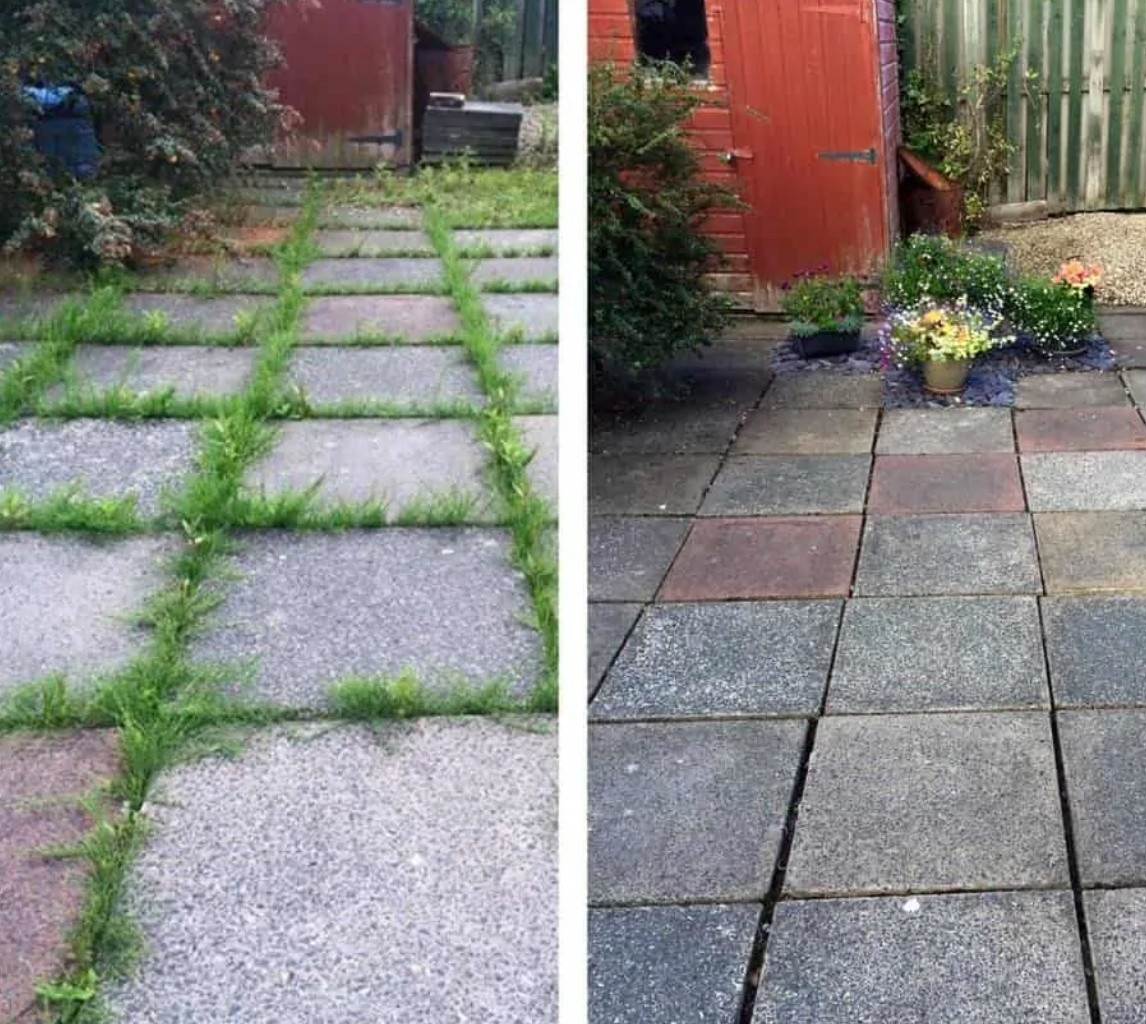
Concentrated vinegar can kill grasses and moss growing through the joints in fences or interlocking paving. Just apply it a few times with a sprayer to problem areas and the weeds are gone.
Gets rid of ants
Vinegar is very effective at repelling ants. If there is a problem with ants in the garden, pour a 1:1 solution of vinegar and water over anthills or places where ants are most concentrated. The strong smell of vinegar forces ants to avoid those areas.
Repels many pests and unwelcome visitors
Many animals, such as rodents, moles, dogs, cats, rabbits, and deer, find the smell of vinegar unpleasant, so they avoid it. It is therefore suitable to hang unnecessary clothing soaked in concentrated vinegar around the garden, on trees, posts, or even make decorations from them, like scarecrows. The fabric should be re-soaked in vinegar every 6-7 days for better results.
Extends the life of cut flowers
In a solution of one liter of water, 2 tablespoons of vinegar, and one teaspoon of sugar, flowers will stay fresh and nice longer.
Kills weeds
Mix a solution of 3 liters of vinegar (the higher the concentration of vinegar the better), a cup of salt, a tablespoon of lemon juice, and 2 tablespoons of dishwashing liquid. Shake the solution and apply it to weeds with a sprayer. Try to cover as large an area of weeds as possible. Results from our eco-spray should appear within two to three days.
Serves as an insecticidal spray
Vinegar is an effective solution for removing unwanted insects in the garden. Create a vinegar spray by mixing three parts water with one part vinegar and adding a tablespoon of dish soap. Shake the mixture to combine. Spray it on unwanted pests.
Removes rust from garden tools
Vinegar can also be used to remove rust from tools. Just soak the tools in undiluted vinegar. Leave them for a few minutes, then rinse and the tools will be clean and rust-free.
Acts as a fungicide
You can protect plants suffering from fungi and molds with vinegar. Creating a fungicidal mixture is simple. Just boil two teaspoons of vinegar with chamomile tea. Fill a sprayer with the liquid and spray the affected plants. It’s safe and ecological!
Great help for poultry keepers
Add vinegar to chickens’ baths. It is healthy for the respiratory system not only in people but also in chickens. It removes mucus and has antibiotic properties. The vinegar environment also reliably destroys microorganisms in the coop.
Clean eggs with it. Just dip them for 10 seconds in warm vinegar. It helps remove stains and loosens dirt and grime
Remove dirt from water containers. From time to time use a little vinegar to remove minerals from the containers from which chickens drink. Minerals bind dirt, which attracts bacteria. Chickens are thus permanently exposed to various diseases, and so are their meat and eggs.
When cleaning the henhouse, spray the walls with white vinegar. This repels mites, lice, and other nasty creatures. It also helps remove odors.
Soak the chickens’ feet in vinegar water. This helps soften dead skin on the feet and thus remove various fungi.
Vinegar loosens dirt from problematic and hard-to-reach areas, such as wire mesh, cages, and perches. These also need to be disinfected from time to time.
Vinegar as a spray conditioner? Chicken feathers also suffer from mites, lice, and similar pests. It’s good to spray chickens every two weeks with water that contains a little vinegar.
Cleaning the incubator. If you have chicks in an incubator, you definitely need to clean it. Vinegar is a great disinfectant before use.


