
Article content
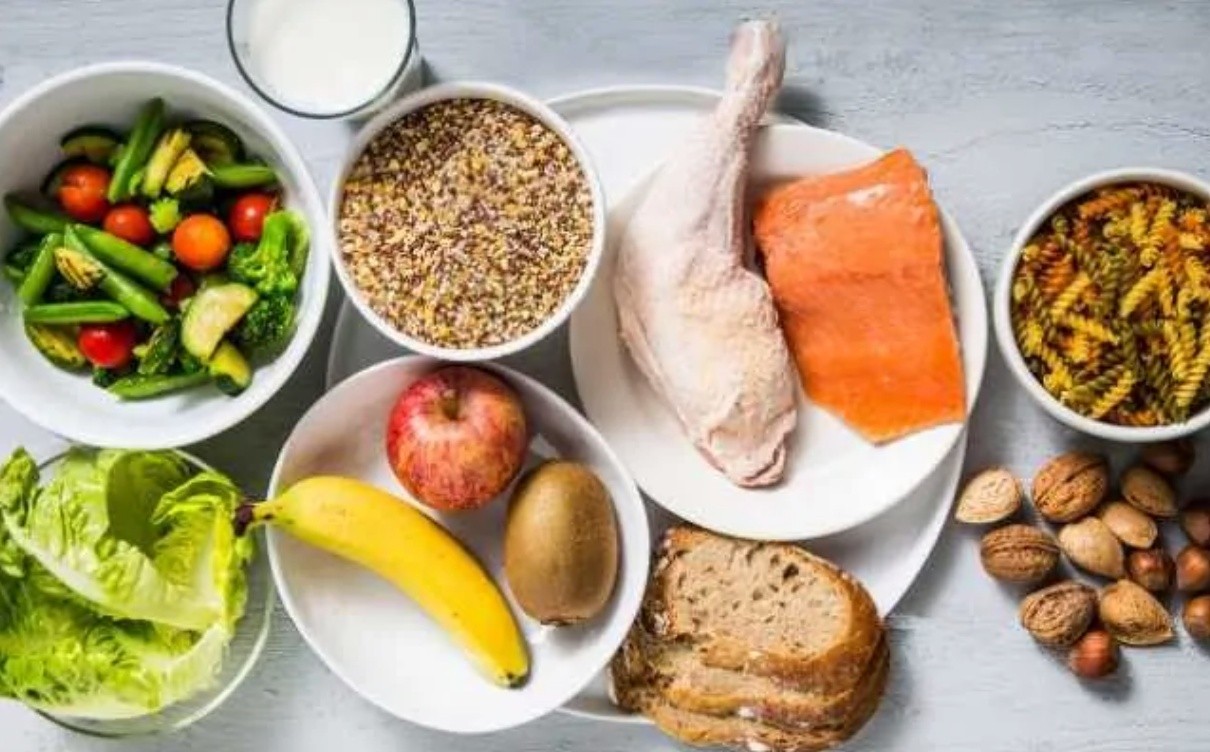
The key to health for the human body is a balanced diet – vegetables, fruit, grains, meat and dairy products. No food group should be missing, but none should be excessive. Besides this general rule, however, each organ has its own “preference” for a specific food that provides the optimal amount of nutrients necessary for its proper functioning.
The brain functions properly thanks to fatty acids from fish
Medical research has shown that there is a close link between Omega-3 fatty acids found in fish and memory. A study by professors at the University of Pittsburgh shows that in people who eat fish at least once a week, the parts of the brain responsible for learning and memory are more developed.
Experts, however, emphasize that the method of preparation also plays an important role: frying destroys the fatty acids, so fish should be baked, stewed or grilled.
Muscles need bananas
Those who go to the gym know this: before training it’s appropriate to have a light, energizing meal and the quickest solution is a banana. It is the most important fruit for athletes who want to develop muscle mass. A banana contains a real cocktail of nutrients needed for muscle growth: folic acid, vitamins (A, C, E, B1, B2, B3, B6, K), potassium and calcium.
Hair needs vitamin C
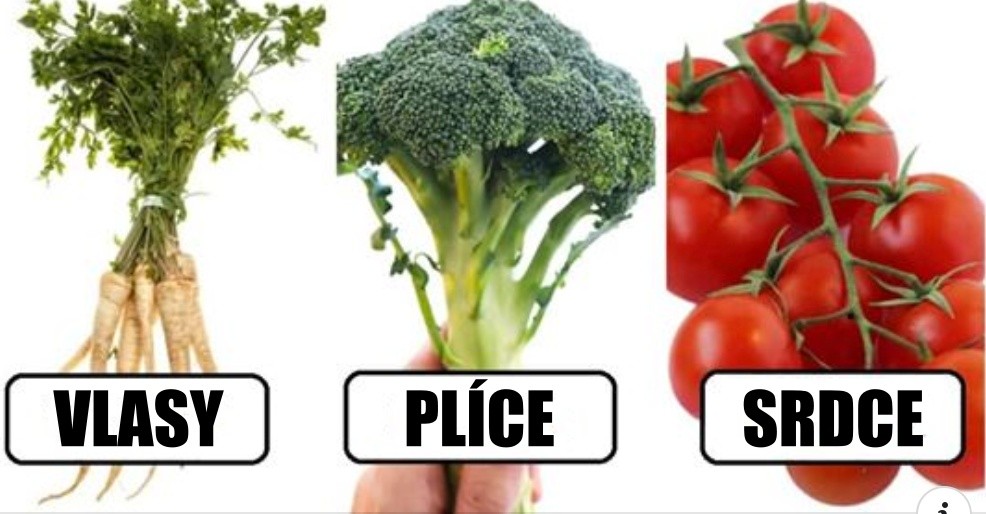
Vitamin C is found mostly in fresh vegetables. For example, parsley contains a larger amount of vitamin C than, for example, lemon. Eat fresh vegetables in salads to keep your hair healthy. Leafy vegetables also contain a high concentration of zinc, an important mineral that prevents hair loss.
Beta-carotene benefits the eyes
Beta-carotene is a precursor of vitamin A, without which we would not see. This vitamin activates the functions of cells with a visual role, contributes to good vision and eye health. Vitamin A is found in abundance in carrots, but also in other orange vegetables. However, vitamin A breaks down with heat, so it is recommended to consume these foods fresh.
The lungs love broccoli, cabbage and radishes
These foods play an important role in cleansing the lungs, they also help treat anemia and oxygenate the body.
For a healthy heart eat tomatoes
Tomatoes are very similar to the structure of the heart and resemble it with their chambers of seeds, similar to the cavities of the heart. Tomatoes are associated with lower blood pressure and in natural medicine they are recommended to people with cardiovascular problems.
The intestines prefer healthy fats
Uncooked plant fats help with detoxification and the restoration of the lining of the small and large intestine. Try to eat avocado more often, which has many health benefits.
Cherries protect the intestines
Cherries contain substances that are necessary for intestinal health. For example, the anthocyanin coloring they contain is a strong antioxidant that stimulates the destruction of cancer cells especially in the intestines and colon. Pectin is a soluble fiber that stimulates digestion. Quercetin increases the resistance of cell membranes to attack by free radicals and phytosterols lower cholesterol levels.
The skeleton prefers citrus fruits
These fruits are rich in vitamins, even vitamin D. But they also contain nutrients that our bones need to maintain in order to preserve their structure and strength. A fruit smoothie several times a week can work real wonders for your bones.
Nails need seeds
Flax, sunflower, chia, sesame seeds, etc. are rich in nutrients and oils that help nails become more resilient and prevent splitting.
Blackcurrant benefits delicate skin
If we had to single out one substance responsible for a youthful skin appearance, it would be resveratrol. It is considered the most effective antioxidant in nature and is 50 times more active than vitamin C. Resveratrol inhibits the aging process and is valued in the medical world for its anti-cancer effects. It is found in the berries of small fruits, for example in grapes, blueberries, currants, raspberries, cherries and others.


