Article content
The rose is often referred to as the queen of flowers. This beautiful flower with a captivating scent has been cultivated for more than two thousand years. Besides being an ornament of any garden or room, this flower also has many health-beneficial effects that many people do not know about. So let’s look at the rose, more precisely at its petals, from a slightly different angle today.
Rose petals – why and how to use them
Rose petals are very rich in vitamins A, C, B3, E and F. In addition to these, rose petals also contain a large amount of essential oils, which is also the reason why smelling a rose positively affects our mood. If you want to use the petals as a medicinal remedy, there is nothing complicated about it. Thoroughly clean harvested rose petals of any insects and let them dry in a warm, dry and dark place. The drying process can take quite a long time, up to one week. After drying, it is advisable to store them in a closed glass container to preserve freshness, quality and scent. The easiest thing is to prepare a tasty and medicinal rose tea from these dried petals.
Rose tea and its effects on human health
Rose tea has primarily calming effects and also positively influences the cleansing of our blood. It also achieves positive effects in the treatment of rheumatism, sore throats and headaches. It is recommended for problems with the liver, jaundice or to support the restoration of the intestinal microflora after antibiotic treatment. Women will appreciate it for problems with heavy menstruation and other female issues. Conversely, people with kidney or gallbladder diseases and pregnant women should avoid consuming rose tea. To make rose tea, prepare two tablespoons of dried and crushed rose petals and three hundred milliliters of water. Simply pour hot water over the rose petals and let them steep for five to ten minutes in a covered container. Then strain the petals and the tea is ready. If you want, you can sweeten it with a little honey.
Rose syrup
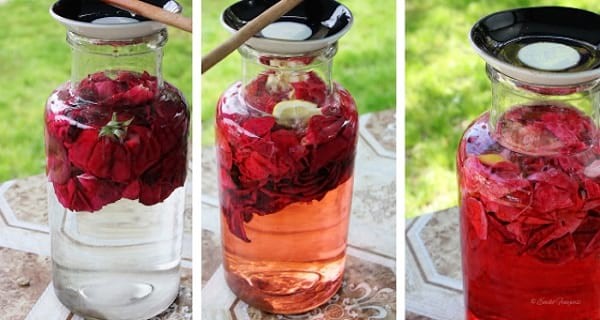
In addition to tea, you can also consume rose in the form of a syrup, which is an effective aid, for example, with respiratory problems. Simply pour half a liter of water over approximately two handfuls of dried rose petals and let the mixture stand for one day. Then shake the mixture, strain the petals and boil the remaining liquid with a quarter kilogram of sugar. Before finishing the boiling, add the juice of one lemon and boil for another five minutes. The recommended dose of this syrup is two to four tablespoons daily.
Rose oil and rose water – cosmetic treasures
Essential rose oil is one of the most commonly used oils in cosmetics and perfumes. Its effects especially benefit sensitive and dry skin; its influence on slowing down the aging process has been demonstrated. The production of rose oil is fairly demanding and financially costly; it is reported that about three thousand kilograms of petals are needed to produce one liter of rose oil. In addition, rose oil is said to have antidepressant and aphrodisiac properties. Another cosmetic wonder, besides rose oil, is rose water, which is produced by distilling the petals. It is excellent for fighting acne and other skin problems.