Article content
If, when buying fruit and vegetables in a store, you are interested in whether you are buying organic produce or, on the contrary, produce that has been genetically modified, grown using herbicidal and fungicidal agents and chemical fertilizers, then you should focus your attention on the stickers that are often on fruit and vegetables and can reveal a lot.
What the codes reveal
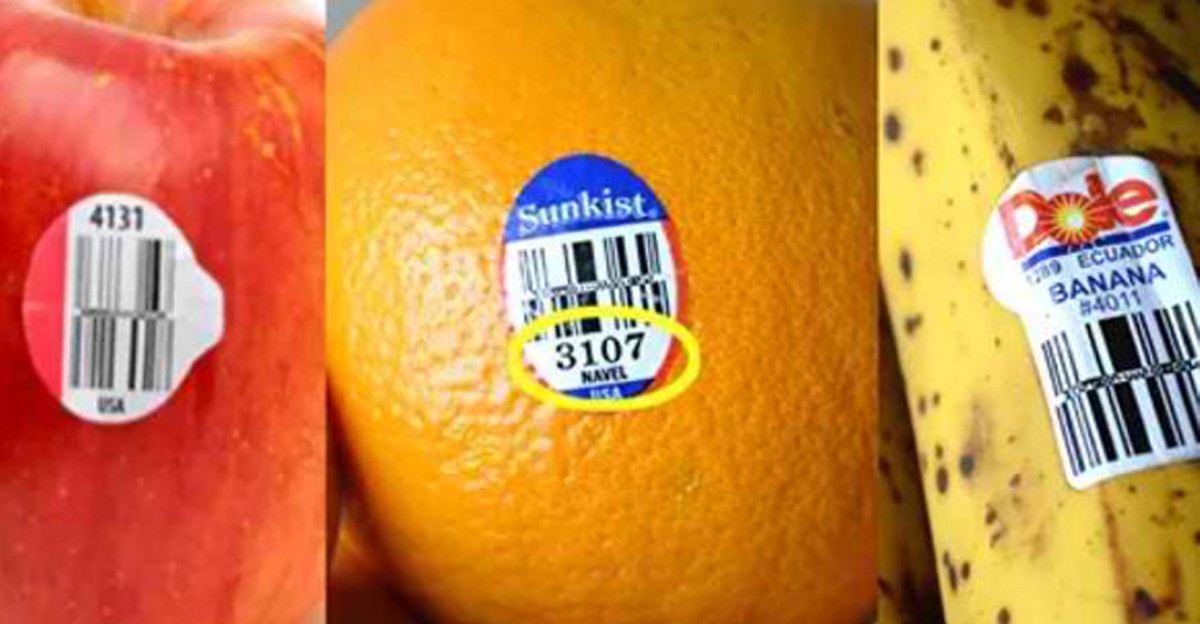
The first clue is the code, which differs by the number of digits.
If the code is four-digit and the first digit is 3 or 4, it means it is a crop grown using conventional methods.
If you want to know the designation of the fruit or vegetable you are buying, look at the last four characters of the code, which always determine the type. For example, bananas will always carry the designation 4011.
Sometimes you will find a five-digit code on the produce. If the first digit is 8, it is genetically modified fruit or vegetable. Our favorite banana will thus have the code designation 84011 in such a case.
You can rejoice if the first digit of the five-digit code is 9, because that means it is an organic crop. Logically, organically grown bananas will therefore have the designation 94011.
Yes, it is true that organic fruit and vegetables can usually be safely recognized by a higher price in addition to the code. From scientific studies, however, it follows that consumption of pesticides, which are often contained in produce that is not organic, can cause serious health problems especially in children, but also in the sick or otherwise weakened individuals. When it comes to specific health problems, these can include, for example, cancer or disorders of the nervous system.
Which produce you should always buy organic
Given the risk of unwanted substances (especially pesticides) in non-organic cultivation, it is always more appropriate to choose organic produce, especially for:
- cucumbers
- cherry tomatoes
- spinach
- potatoes
- strawberries
- grapes
- apples, and
- peaches and nectarines.
It is especially recommended to pay attention to the way apples, peaches, nectarines and potatoes are grown. These popular crops generally pose the highest risk of pesticide residues.