
Article content
Garlic is very popular in our and not only our cuisine, and it is added to many dishes to enhance their flavor. Garlic, for example
- adds spiciness to almost any soup
- is an indispensable ingredient in the preparation of potato pancakes
- is a basic ingredient in an excellent and popular cheese-based spread, and
- is also used to flavor various types of meat.
We are simply used to having it in the kitchen at hand at all times. However, sometimes it happens that you have the opportunity to obtain a larger amount of garlic, but you lack experience with its proper storage. If you do everything correctly, garlic will really last a long time even in home conditions, but if you make a mistake, the garlic will sprout or begin to undergo unwanted rotting processes.
When it comes to sprouting, the truth is that for proper storage of garlic you should never choose heads that are already sprouting. Such garlic has already directed its internal strength into the sprout and will soon lose its nutritional value. In addition, it would also spoil more quickly.
For storage use only those heads that are not sprouting, are compact, undamaged, without darker spots or any depressions.
Traditional method of storing garlic
You may have noticed this method in older films from the countryside or when visiting an open-air museum. Garlic heads were tied together and formed braids, which were usually hung in a shady, cooler place. Garlic stored this way lasted for many months. However, this method is not suitable for everyone, especially not for those who live in an apartment.
Salt as a universal preservative
For storing garlic you can use the unique properties of table salt, which prevents the garlic stored in it from becoming damp and sprouting, thus prolonging its shelf life.
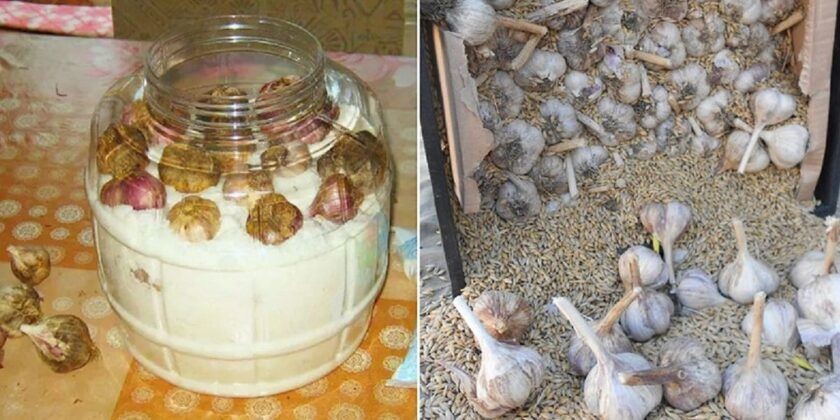
Prepare a suitably large glass container or box, pour salt into the bottom and place the garlic heads into the salt layer so that they are positioned with the roots upward and do not touch each other. Then, depending on the amount of garlic, continue to layer salt and garlic.
Besides salt you can also use another substrate capable of absorbing excess moisture, for example flour or wood shavings.
Singeing the roots
If you have fresh garlic available, it usually has roots that grow from the center of the bottom part of the head. These roots are recommended to be singed, for example with a lighter or matches.


