
Article content
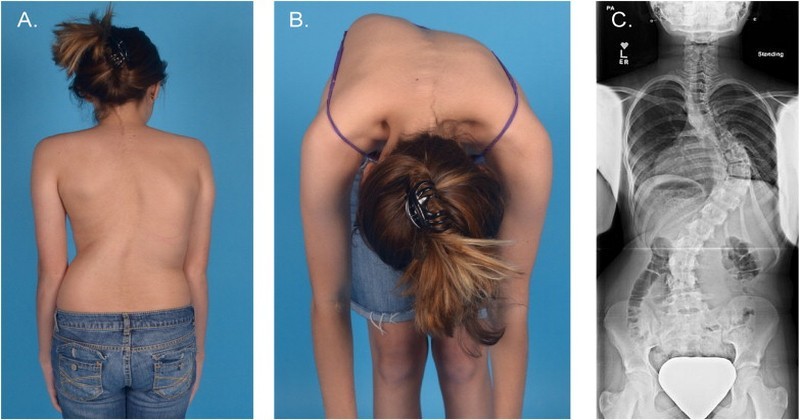
Scoliosis is, very simply, a condition in which a patient’s spine is shaped into an unnatural curve. Large curves can cause serious health problems, such as pain or breathing difficulties. Some individuals are born with this disorder, while others struggle with it because they acquired it over time due to poor posture. Getting rid of it can be easy or difficult depending on the stage and extent. In most cases, special exercises are sufficient, which your general practitioner or neurologist can recommend.
What’s it about?
So what exactly is it? Scoliosis is a disorder that causes abnormal curvature of the spine. The spine has normal curves when viewed from the side, but when viewed from the front it should appear straight. There are several different types that you and your doctor may encounter. Based on the diagnosis, the correct treatment approach can then be determined. Let’s look at what types of the disorder you might have:
- kyphosis – the curve of the spine when viewed from the side is tilted forward,
- lordosis – the curve of the spine is tilted backward (commonly occurs in the cervical and lumbar spine),
- scoliosis – unusual curves develop on both sides of the body and the vertebrae twist into the shape of the „C“ or „S“.
According to professional studies, scoliosis is found about twice as often in girls as in boys. It can be observed at any age, but it is most common in individuals older than 10 years. Scoliosis can be hereditary, and therefore there is a greater likelihood that children will inherit it from their parents.
Types and causes of scoliosis
Scoliosis affects about 2% of women and 0.5% of men. In most cases the cause of scoliosis is not known. This type is described based on the age at which the disorder develops, as with all others. For this reason, a visit to a specialist physician is a matter of course, and children may end up attending check-ups and spine correction until adulthood. According to age it is divided into three categories.
- If individuals are less than 3 years old, it is called infantile idiopathic scoliosis (scoliosis in children).
- Scoliosis that develops between ages 3 and 10 is called juvenile idiopathic scoliosis.
- People older than 10 years (10–18 years) have adolescent idiopathic scoliosis.
What are the causes?
As mentioned above, idiopathic scoliosis and its subtypes make up more than 80% of all patients with scoliosis. This means that its cause cannot be determined precisely. However, there are three main areas from which doctors proceed. One is functional impairment. Here the spine is normal, but an abnormal curve develops because of a problem elsewhere in the body. It may be because one leg is shorter than the other, etc.
With neuromuscular causes the problem is in the formation of the vertebral bones. The vertebrae either do not form completely, or they do not separate from each other during fetal development. This type of congenital scoliosis develops in people with other disorders, including birth defects, muscular dystrophy, cerebral palsy, or Marfan syndrome (an inherited connective tissue disorder). Here we are talking about individuals who inherited their problems.
The last possibility is degeneration. Unlike other forms of scoliosis that occur in children and adolescents, degenerative scoliosis occurs in older adults. It is caused by changes in the spine due to an arthritis called spondylosis. Weakening of the normal ligaments and other soft tissues of the spine in combination with abnormally sharp bones can lead to abnormal curvature of the spine. The spine may also be affected by osteoporosis, vertebral fractures, etc.
Symptoms
The most common symptom of scoliosis is an abnormal curve of the spine. The change in the spine’s curve tends to be very slow, so it is easy to overlook until it becomes a more serious physical deformity. The head may appear off-center, one hip or shoulder may be higher than the other. These are small symptoms, but treatment and a visit to the doctor are essential. Otherwise you will suffer unnecessary pain for many years.


