
Article content
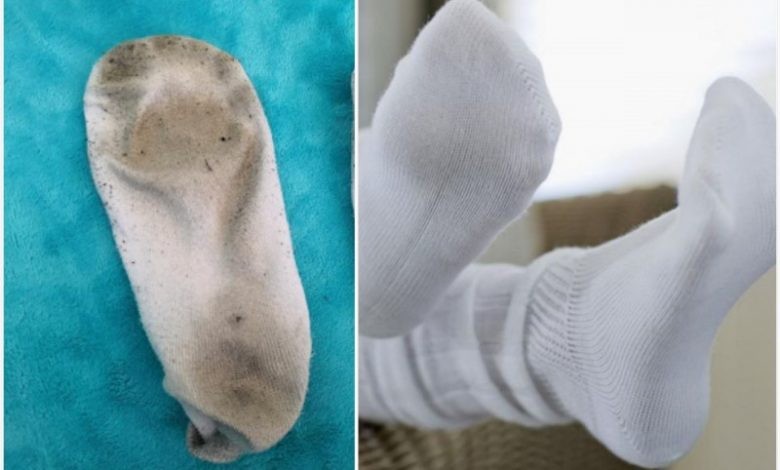
Whitening underwear, and especially socks, may at first seem like a superhuman task. Ground-in dirt in our socks doesn’t necessarily mean poor hygiene or insufficient washing, but quite simply white fabric is prone to attracting dirt and will keep its bright whiteness only for a short time, even if you try your hardest. However, there is a great way to restore old clothes, especially underwear and socks, to their original color.
How to whiten socks and underwear?
This method is also suitable for other types of clothing, but avoid delicate fabrics. The opposite effect could occur there and you might permanently ruin the garment.
What you’ll need to whiten the laundry?
- Laundry detergent
- Sodium bicarbonate, or baking soda
- 9% vinegar
All the ingredients are easily available, so you don’t need to worry that we’re suggesting anything complicated.
How to do it?
First, soak the socks in water with dissolved laundry detergent and wash them by hand. The detergent will remove dirt, but the gray discoloration of the socks and stains will still be visible. That’s why it’s time for baking soda. Rinse the socks of detergent residue and sprinkle baking soda over their entire surface. Try to distribute it over all the affected parts of the socks that you want to whiten. Then pour 9% vinegar over the socks and let it sit for a while, about 20 minutes, or depending on the degree of soiling. Rinse the socks and wash them again by hand in water with detergent.
Keep white laundry white for as long as possible
This procedure will help you keep your laundry white for as long as possible; moreover, it is very simple and harmless both for your laundry and for your skin. You can also apply the method, for example, to dirty tablecloths or white canvas sneakers. Once again, we remind you to avoid clothing made of delicate fabrics. Although it is not an aggressive process, thin fabrics can easily be damaged, even if you are extremely careful.


