Article content
This is about iodine. It is a very important compound that benefits not only people during periods of growth, development, longevity, health, and overall improvement of well-being, but it is also able to rid garden and household plants of pests such as powdery mildew and molds. At the same time, roots will be protected from rot and overall the plant will grow beautifully.
Just a small amount is enough and the plant will grow beautifully
If you also want to try the power of iodine on plants, simply buy one small bottle of the preparation, which will easily last you until the next season. It is used only drop by drop.
Iodine for any plants
Just like us humans need iodine, so do plants, in which it plays an important role in overall growth. Its great property will greatly contribute to the synthesis of amino acids and proteins within the plant, acts antiseptically, contributes to photosynthesis and the formation of nitrogen.
Watering solution
Thanks to its antiseptic effects, iodine will be an effective prevention against molds and bacteria — it will be especially effective against rot and powdery mildew. However, if the plant lacks iodine or any other necessary substance, it will be very susceptible to pest attacks or other diseases. It can therefore be said that iodine is most often recommended for plants planted in peat, sandy soils, or in soil with no nutritional value. The soil pH should also be taken into account. For example, very acidic soil is unfavorable for iodine and its effect becomes nil. In such cases iodine sinks into lower soil layers and the plant cannot access it. So the most natural environment for iodine is fertile soil.
Iodine for plant recovery
An experienced gardener may notice a deficiency of this trace element. However, for most people recognizing it will be very difficult, so a preventive iodine treatment is recommended to protect and nourish the plants. Iodine will find its place in every garden and you don’t have to fear plant damage.
Solution for seedlings
An iodine solution will keep seedlings healthy and will also help them grow faster and strengthen. If you want to use the solution for seedlings, it’s good to start early, because with the use of this trace element the seedling will grow quickly and be resistant to adverse conditions and various diseases that can kill the seedling.
Which plants benefit most from iodine
The solution made by mixing water and iodine will be most ideal for seedlings of tomatoes, cucumbers, peppers, eggplants and cabbage. Prepare the solution as follows: add one drop of iodine to three liters of water. Mix the liquid thoroughly, let it sit for a few minutes, and then water the seedlings at the roots. To enrich the plants with iodine, always water at the roots to enrich the soil. The liquid must not touch the leaves.
Solution against molds
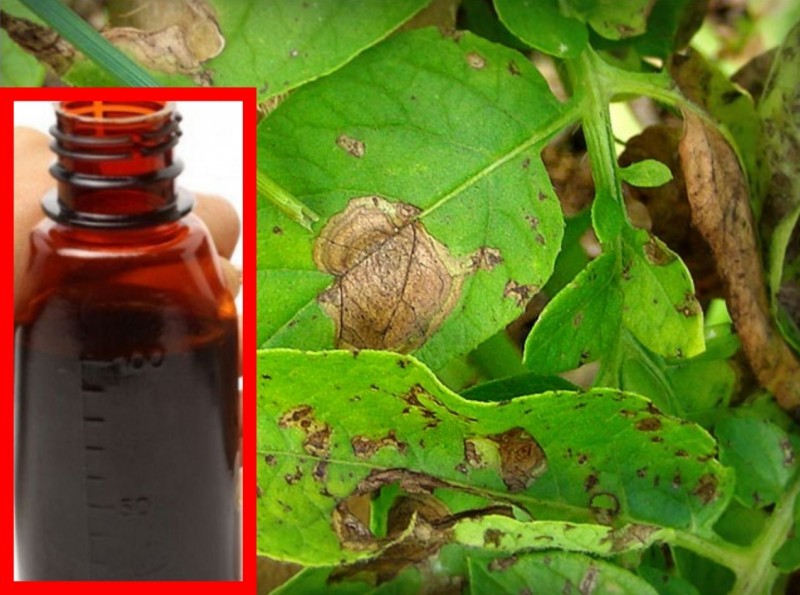
Iodine against molds will be suitable for houseplants as well as garden plants. If you are a gardener, you surely know that potato blight is a real disaster. It occurs mainly on tomatoes and the first sign is brown spots on the underside of the leaves. Gradually the leaves begin to yellow and fall off because they are dry and undernourished. Unfortunately the same happens to the fruit, which is why it is ideal to use an iodine solution.
Solution against powdery mildew
Powdery mildew most often occurs on currants, gooseberries or blackberries. However, it can appear on cucumbers, tomatoes, peppers and pumpkins. Roses, peonies and even chrysanthemums are not exempt.
Watering with iodine
Against powdery mildew, a solution with one milliliter of iodine and one liter of skimmed milk or whey per nine liters of water works perfectly. You can apply the spray every two weeks until the powdery mildew disappears.
Against pests
Larvae, as well as beetles, aphids and others, can be removed using an iodine solution. Just mix 20 milliliters of iodine into ten liters of water and pour this prepared solution to the plants. One liter per bush is enough.
For houseplants
It can be used for vegetables, herbs, as well as houseplants. It can be used for weakened, non-flowering and otherwise damaged plants. Always water only into slightly moist soil and only around the edges of the substrate. Mix one drop of iodine into one liter of water.