Article content
Do you want to protect your tomato crop from being attacked by various types of fungi? You can try a small trick that, according to everything, should work well. It protects tomatoes from late blight, which can appear very quickly and damage the crop in several places at once. This disease is especially dangerous for nightshade crops, which include tomatoes.
What actually is late blight?
If you want to protect the crop from late blight, you can try the trick with copper wire. We’ll show you whether it really works, but first let’s introduce what late blight actually is. The cause of this disease is the organism Phytophthora. There are many strains of these fungi in the world, the most dangerous is Phytophthora infestans. This fungus can destroy crops of various kinds during a single season – potatoes, peppers, eggplants, or tomatoes. Sometimes the blight can also reach fruit; there are cases when it attacked garden fruit trees as well.
Phytophthora affects the whole plant – from flowers to roots. Cracks or black rot may appear. Cracks can lead to infection by other types of fungi and additional bacteria. Infected fruits can rot quickly, and even if you pick them in time, they will have an unpleasant taste and you’ll still have to throw them away.
Copper and fungi cannot fight each other
Copper compounds can quickly destroy cells and kill all bacteria and fungi. That is why many gardeners use copper to protect their crops; there’s nothing complicated about it and only a few wires are enough. Earlier, however, they had to experiment and find out whether copper would actually work. That’s why they began using copper wires. And this method has become very popular in recent years. Copper oxidizes in the air and compounds and ions pass through the tomato bushes. However, it’s possible for plants to get a copper overdose; a larger amount could kill the crop.
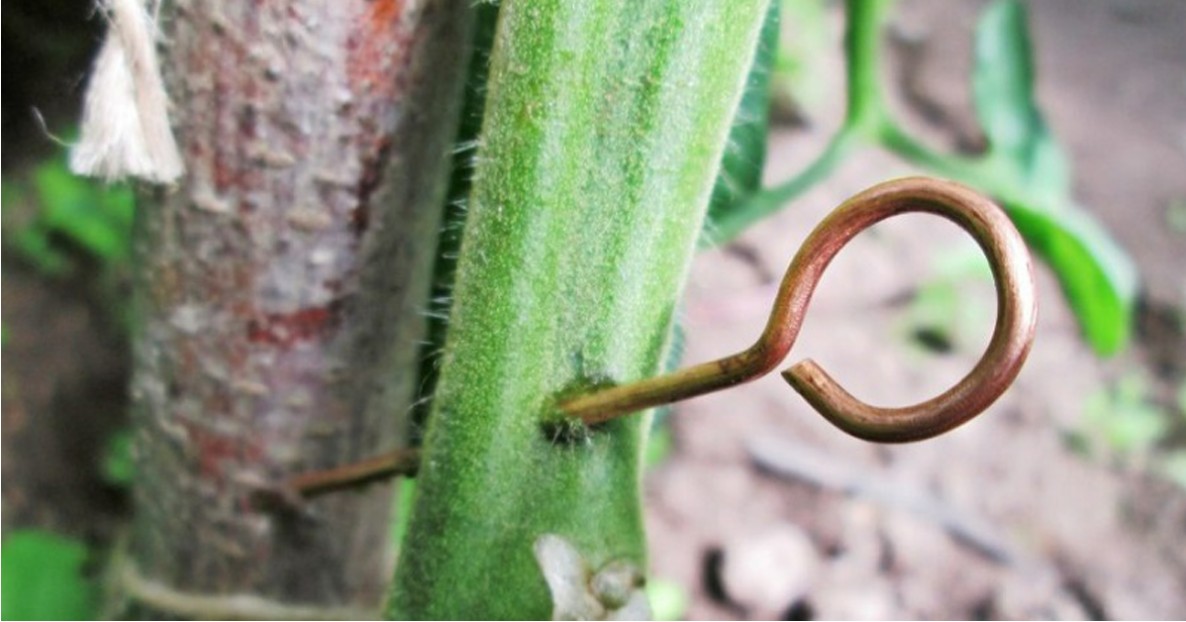
You should use the wires only on mature plants that have fruits. Piercing young bushes will be ineffective. You can use copper wire in several ways to protect against blight. You can tie stems with it. The wire bends easily, fixing the plants and thus protecting them against damage. You can also bind the roots with wire. This method first appeared in Germany. A ring is made in the ground, into which the bush is planted together with the copper.
So how should copper wire be used correctly?
If you want to ensure a preventive effect of copper for the plants, you must follow several rules. Tie the plant with wire, or wrap the roots; you can also place copper in the holes where you will plant the plants. If you pierce the plants with wire, that is also a solution, but the crops may be damaged.
Gardeners who have tried this method have different opinions about it. Some have been using it for several years and their tomatoes were never attacked by fungi. Others tried it but were not satisfied with the result because the tomatoes were infected with blight. It is advisable to try this method, but you must try all the ways and then draw conclusions accordingly.