
Article content
Spring and summer promise beautiful weather, but it is also tick season. At the beginning of spring it can be even harder to notice them, because besides adult specimens nymphs can also attack us.
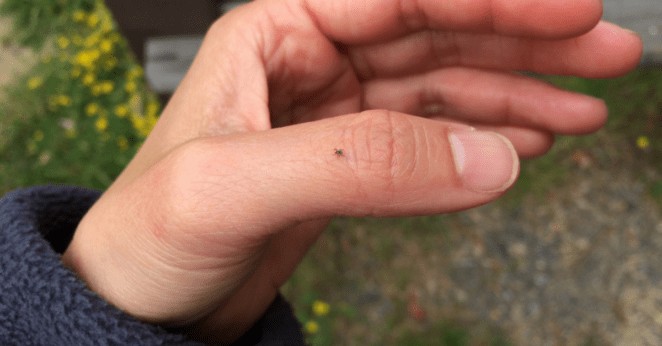
Nymphs are one of the developmental stages of a tick. It is the phase between a larva and an adult. Don’t be fooled by their immaturity. Although they are the size of a poppy seed, they spread serious diseases in the same way as adult ticks. They are even more dangerous because they are hard to find on the body and you may not notice them at all. However, if you leave them on the body until they drop off by themselves, the risk of infection increases significantly.
Checking after being outdoors is essential
Ticks do not only inhabit forests, but also parks, meadows, gardens or areas near water. It doesn’t matter whether you walk or cycle. After every time spent outdoors you must be extremely careful and thoroughly check all parts of your body to see if you have found a tick and remove it in time. You must be especially attentive with nymphs because they are small, lighter in color and are often found only with the use of a magnifying glass.
Even repellents don’t provide 100% protection
Since nymphs, like adult ticks, transmit serious diseases including Lyme disease, it is worth protecting yourself against their attack. Repellents are of course a great option, but they may not always be 100% effective. You therefore need to check yourself even if you use a repellent and regularly reapply it.
Remove the tick immediately
As soon as you discover a tick or nymph, it is extremely important to remove it immediately. As time passes during feeding, the tick’s saliva secretions increase, and it is through these that an increasing amount of harmful substances that lead to disease is introduced into our body. How to remove a tick correctly? Disinfect the bite site and, using a moistened wipe or piece of cloth, gently move the tick from side to side. It is also possible to carefully lift the tick and remove it with tweezers.


