Article content
Unfortunately, we all live today in a toxic environment where we are permanently exposed to foods contaminated with chemicals. Therefore it is almost impossible to avoid toxins.
For us, this means that our digestive system and especially the liver can easily become overloaded. We are built to continually flush out harmful substances, but if there are too many, the body may not be able to cope and instead of eliminating them they begin to accumulate.
We divide toxins into two categories:
- water-soluble
- fat-soluble
Water-soluble toxins are relatively easy to get out of the body via the kidneys, which filter the blood. On the other hand, fat-soluble toxins are a tougher nut to crack. These include many pesticides, preservatives, heavy metals, plastics and other environmental toxins.
They must first be metabolically converted into water-soluble substances and only then can they be expelled from the body. A key role in this process is played by the liver. If the liver does not function properly, toxins find their way into the body. First into the blood and then into fatty tissues or the brain, where they can settle for many years.
When food is consumed it first passes through the stomach, where it is mineralized and then moves into the small intestine, where digestion continues with enzymes from the pancreas. The small intestine contains millions of tiny villi that absorb nutrients into the bloodstream. At the same time toxins and fats are transported to the liver for further processing.
If this process is disturbed, toxic substances then freely reach other parts of the body. In addition, the lymphoid tissue of the gut, called the Gut-Associated Lymphoid Tissue (GALT), surrounds the entire digestive system and also helps process nutrients and remove toxins.
It is therefore extremely important that this approximately 0.5 cm thick layer of the intestinal lining and likewise the 0.5 cm thick outer tissue of the lymphatic system (GALT) function properly and are not overloaded. When everything works as it should, the lymphatic system carries all fats to the liver.
There, good fat is turned into cholesterol (otherwise very necessary for the body) and other substances essential for the formation of cell membranes, hormones, nerve cells in the brain or the skin. Bad fat is also processed and then excreted from the body. If the lymphatic system does not function correctly, the entire process of processing good and bad fats is at risk.
So how to find out whether the fat-processing system by the lymphatic system and liver works?
It is possible by observing the following symptoms:
- bloating
- breast itching and increased sensitivity during menstruation
- fat accumulation around the abdomen
- excessive sensitivity
- irritated skin and itching
- stiff joints
- swelling of hands and feet
- bowel movement problems (constipation)
- occasional headaches
When there is enough mucus you will have regular stools (1 to 3 times a day), but at the same time you may suffer from intestinal gas, some associated illness or extra fat around the abdomen. With excessive mucus production there can be stool thinning and the onset of diarrhea. In such a case you should not delay treatment. This condition needs to be taken seriously, because it clearly indicates that your intestinal villi are damaged and wrapped in mucus.
At that time the processes of processing good fats, eliminating toxins and normal immune responses are blocked. Under normal circumstances, when toxins appear in the lymph, their neutralization takes place in more than 500 nodes of the lymphatic system. However, if there is too much mucus, toxins are not excreted in the lymphatic system but are redirected to the liver, which then becomes overloaded and may even be damaged.
Moreover, other harmful elements can penetrate the body, such as bacteria, viruses, heavy metals, parasites or insufficiently digested foreign proteins, which are often the cause of autoimmune diseases. It is therefore extremely important to maintain balance in the intestines. This balance can be disrupted by several factors. In addition to the already mentioned stress, these include:
- processed foods
- excessive coffee drinking
- sweetened drinks
- additives in foods (colorings, stabilizers, preservatives and the like)
- acidity
Ultimately, excessive intestinal mucus can lead to liver damage, blocking of pancreatic enzymes, undigested food rotting in the intestines, gallbladder problems and a whole palette of other health issues.
If you experience occasional constipation, too loose stools or mucus in the stool, feelings of heaviness, long undigested food in the stomach or if you feel pain after eating, this may be a sign that your detoxification pathways are compromised and that you have toxins deposited in fat. In such a case you will need to avoid certain foods and at the same time start consuming certain foods to reopen these detoxification pathways.
For example, Ayurveda says that to maintain a healthy intestinal lining and the body’s proper detoxification, it is necessary to restore the flow of lymphatic fluid and clear the flow of bile.
Foods that have a positive effect in achieving these goals mainly include:
- garlic
- grapefruit
- red beet
- carrot
- green tea
- leafy greens
- apples (especially for the gallbladder)
- olive oil
- avocado
- whole grains
- cruciferous vegetables (cabbage, broccoli, cauliflower, Brussels sprouts)
- lemons and limes
- walnuts
- turmeric
Below we offer you one of the best cures for cleansing the intestines, liver and gallbladder.
Ingredients
For its implementation you will need the following items:
Preparation method
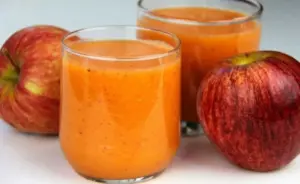
It is very important that 4 to 5 days before this cleansing cure you eat as many apples or drink as much apple juice as you can.
You can also take some supplements containing malic acid.
For the last 2 days (days 4 and 5 before the cure itself) drink 2 to 2.5 dl of apple juice every 2 to 3 hours. This will ensure the success of the cleansing procedure.
On the day of the cure have a light fat-free breakfast.
Then follow these 7 steps:
1) At 14:00 mix 4 tablespoons of Epsom salt in 3 glasses (6 dl) of clean water. Pour it into a jug or glass bottle and store in the refrigerator. After 14:00 do not eat or drink anything.
2) At 18:00 drink 3/4 of a glass (1.5 dl) of the water and Epsom salt solution that you prepared at 14:00. It may taste unpleasant to you, so if you want you can flavor it with 1/8 teaspoon of powdered vitamin C.
3) At 20:00 drink another 3/4 of a glass (1.5 dl) of the prepared solution. Then do whatever you need to do that evening. What follows will be the liver cleanse, after which you should do nothing but lie in bed and rest or sleep.
4) At 21:45 pour 1/2 a glass (1 dl) of olive oil into a container. Squeeze the juice from a whole grapefruit (or three lemons) into it without the pulp. You can also use a manual juicer if you have one at home.
You should have around 1 to 1.5 dl of citrus juice mixed with 1 dl of olive oil, so a total mixture of approximately 2 to 2.5 dl. Close the container and shake it well until you obtain a homogeneous mixture.
5) At 22:00 drink this mixture of olive oil and citrus juice. Try to drink it all within 5 minutes.
After drinking it lie down in bed. Lie on your right side with your right knee drawn toward your chin for 20 minutes. Lie still and do not move if possible. Try to fall asleep.
6) The next morning after waking up drink the third portion of 1.5 dl of the water and Epsom salt mixture. Then you can lie down again for a while.
7) Drink the final, fourth portion of 1.5 dl of the water and Epsom salt mixture 2 hours after drinking the previous 3rd portion. Then wait another 2 hours and only then can you start eating.
It is therefore good to wake up early in the morning, for example at 6:00, drink the water with Epsom salt, then the next dose at 8:00 so that you can start eating at 10:00 in the morning.
This cleansing cure is extremely effective.
Remember that only you are responsible for your health. So help your body when it needs it the most.