Article content
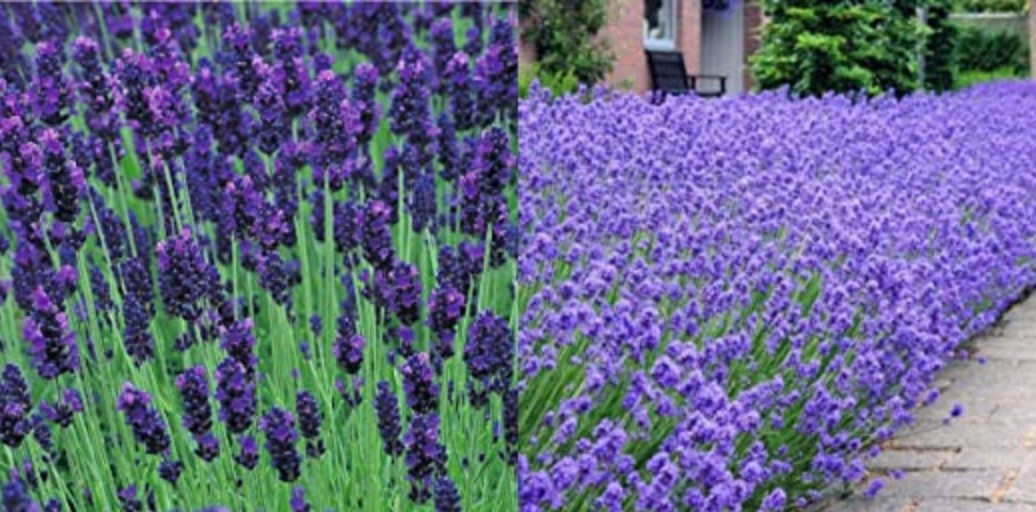
Lavender can be a decoration for your garden too. This useful plant not only smells lovely, but acts as a natural repellent, protects your plants from the invasion of slugs and other pests and moreover — it looks beautiful and also smells amazing. Although its cultivation is not demanding, it is necessary to know how to do it. If you want to have magnificent lavender covered in flowers next year, be sure not to forget the autumn pruning!
Lavender needs to be pruned every year, otherwise it will grow into a large, misshapen shrub that certainly does not beautify the garden. By pruning we shape the plant, while also giving it enough space to grow, thicken and create the best conditions for abundant flowering, which will fully manifest in the 3rd to 4th year after planting the seedling.
Pruning is done twice a year — in spring (in March) and after flowering. Do not be afraid to trim lavender, but never cut into the woody parts of the plant. Shorten the plant just above the branching at a height of approx. 5 – 8 cm. There must remain enough active buds on this part of the plant from which leaves and flowers will develop.
Autumn pruning of lavender
Pruning lavender in the autumn will ensure that the plant blooms denser and more beautifully next season. Autumn pruning of lavender also has an important practical significance. If we did not perform it, the plant’s branches would break under the weight of the snow, which could seriously damage the plant.
How to prune?
During pruning you should remove all the spent flower parts. The cut should not be too deep even in this case — the plant has much less time to heal wounds because its growth activity slows down with the approaching cold winter.
The cuttings we obtain after trimming lavender after flowering can be used as seedlings for its propagation.
Propagation using cuttings obtained from autumn pruning
If you are looking for the easiest way to propagate fragrant lavender, definitely try propagation by cuttings. It is simple and truly fast.
A simple step-by-step guide will show you how to do it:
We need:
- Healthy non-flowering lavender
- a sharp knife
- a pot with a diameter of 10 cm
- substrate — garden substrate enriched with nutrients and well-draining
- rooting stimulator
- a plastic bag
Procedure:
For propagation we choose side shoots of a healthy plant. We take the shoot along with the lower part that attaches it to the main stem. This place is important for proper rooting of the plant.
Using a sharp knife we remove small protrusions on the lower side of the shoot.
Then we remove the lower pairs of leaves so that a bare stem remains on the lower part of the plant, which we can fully insert into the substrate. The places from which we removed the leaves will serve for firmer rooting of the plant.
Then we apply a rooting stimulator to the bare stem, which will make the whole process faster and the plant is protected from possible problems such as mold or rot.
We place the cuttings into the soil around the edge of the pot (I used substrate mixed with sand in a 1:1 ratio).
Water the soil sufficiently and then cover the pot with a plastic bag, which will help keep a humid environment around the cuttings.
Place the pot in a warm, shady place. When the rooting process begins (after 4–6 weeks) cut off a corner of the plastic bag, which will improve air circulation. After a few weeks remove the bag completely. Leave the plants in the pot until they are sufficiently rooted and then transplant into separate pots or into the ground.
Alternative method:
Some of our readers have found the following method effective:
They separated the shoot from a healthy plant the same way as in the first method and removed the lower pairs of leaves. Then they simply placed it in water in a glass and put it on a windowsill. After approximately 8–10 days the plant had rooted and it was enough to transplant it into a pot.
Practical video on how to prune lavender during the year