Article content
Our ancestors have perfect tips in their repertoire for your garden that are worth knowing even today. For example, they’ll even properly show you how to make use of things you thought were problems in your garden!
A molehill can be used brilliantly
Even our ancestors knew that soil from molehills comes from a depth where there are no spores of molds or other diseases and no pests (since the mole would have reliably destroyed them). They sieved this soil and added it to pots for growing flowers and also used it for sowing vegetables or planting various plants.
Damaged woody plants can be saved
Our ancestors knew how to eliminate gummosis and thus save very valuable stone fruit in gardens. Just cut out the affected bark and rub the wound with crushed sage leaves, which act as a disinfectant. You can just as successfully use ordinary vinegar for disinfection.
The end of ants
Our ancestors knew that ants hate aromatic scents. That’s why they pressed tomato leaves, elderflower or cloves into the anthill. The anthill was completely gone in a few days.
A miracle called the willow!
Look around to see if you have a willow on your property or in front of your house. The essence of the trick is that you use the wooden matter of the willow for rooting. All you need are 15 to 20 cuttings of any willow variety and a container with water.
How to do it?
Place the cut branches in the container and pour in slightly lukewarm water. Leave them in the water for at least 24 hours (a 48-hour stay is also recommended), then remove the branches and dip the cuttings you want to plant into the resulting solution for one day. After this time, plant them in the place you have chosen. The natural rooting solution can be stored in a cool place, or directly in the refrigerator for up to one month without losing effectiveness. Cuttings can really do amazing things. Try this old, proven recipe.
Ash and water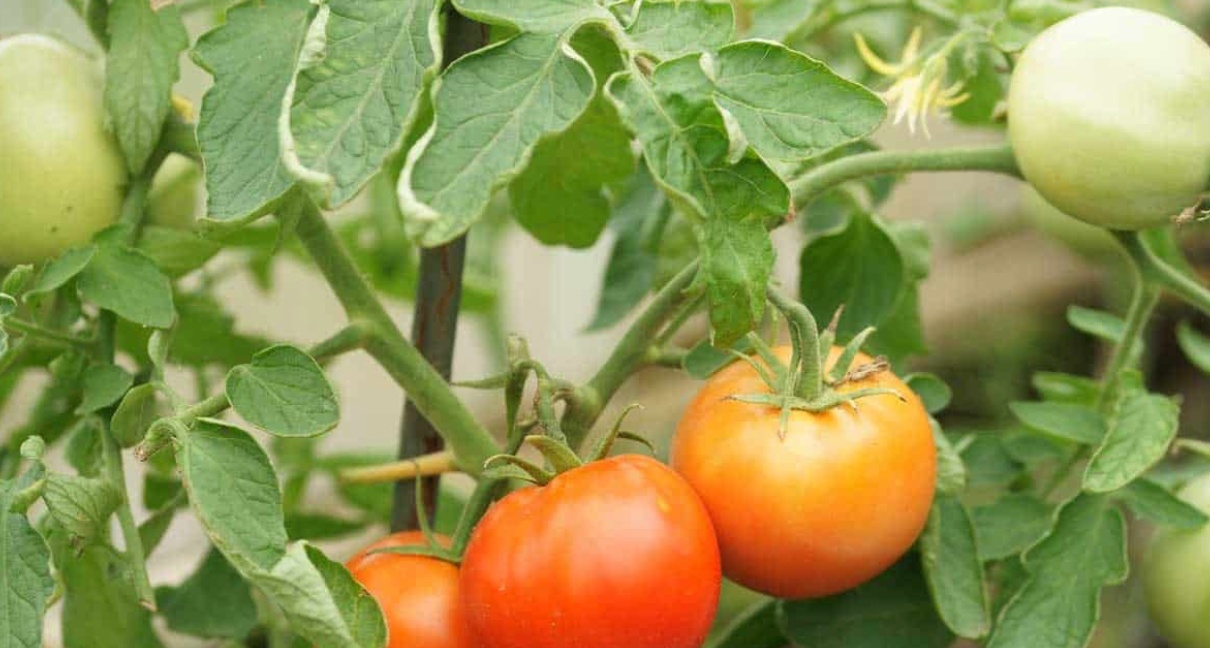
Put 500 g of wood ash into a bucket and pour in 5 l of boiling water. Wait for the ash to sink to the bottom and add another 5 liters of room-temperature water (rainwater is ideal). Let it cool completely and use it to water tomatoes and other vegetables. It’s an excellent natural fertilizer.
Nettle will protect your garden
Nettle ferment or nettle “beer” is very useful for tomatoes. A watering made from this plant protects tomatoes from pests, fungal diseases, and provides them with great nutrition. Collect nettles into a 10-liter bucket (use stems, leaves, and roots), fill with rainwater warmed in the sun and leave in the sun for 7–10 days. Use the brew diluted with water in a ratio of 1:10 for watering. Nettle infusion is also excellent for plants infested with aphids.
An old recipe that strengthens plants and increases their productivity
A decoction of onion skins is an excellent nourishment for cucumbers, pumpkins, zucchini, potatoes, carrots, radishes, cabbage, and tomatoes. Fruit trees and shrubs will also be grateful for this nutritional boost. Prepare the decoction by placing several full handfuls of skins into an enamel bucket, cover with water and place over a flame. Bring to a boil, cover with a lid and remove from the heat. Let the decoction stand for several days and then use it to water vegetables (you can even spray it directly onto the leaves). I dilute it with rainwater, but you can also use settled tap water – for one large bucket approximately 1–1½ l of decoction.
Horseradish will protect apple and pear trees from fungal disease
Moniliosis, which appears on trees, can destroy your entire future crop. Our ancestors knew well how to treat it right from the start. Just grate 300 g of horseradish, pour 1 l of hot water over it and let the infusion steep for a whole day – 24 hours. Then strain and dilute with boiled water in a ratio of 1:10. Apply the solution every 14 days to trees during flowering, as well as shortly before and after it.
Spray against the Colorado potato beetle from walnut leaves
To prepare it you need 1 kg of walnut leaves (fresh leaves from a common walnut tree) and 10 l of rainwater. Mix, let steep for a week and then use as a spray on the green parts of the potatoes. You can make a spray in the same way from the aforementioned ash as well – mix 2 to 3 handfuls of ash in 10 l of water, let it sit for a few hours and use it as a spray.